

Published On: February 17, 2026
Updated On: August 27, 2026
Is Manual License and Appointment Tracking Putting Your Organization at Risk?

Manual license and appointment tracking remains common across agencies, MGAs, and carriers, but it carries more risk than many organizations realize. As regulatory oversight increases and producer footprints expand across states, spreadsheets and manual checks struggle to keep up.
This article examines the systemic challenges behind licensing breakdowns, the human cost of outdated processes, and why visibility, consistency, and scalability are becoming essential for long-term compliance.
Key Takeaways
- Manual license and appointment tracking erodes operations and compliance over time.
- Manual methods increase administrative burden, consume a significant amount of time, and increase the risk of regulatory scrutiny.
- Proactive license management allows licensing teams to focus on oversight rather than constant remediation.
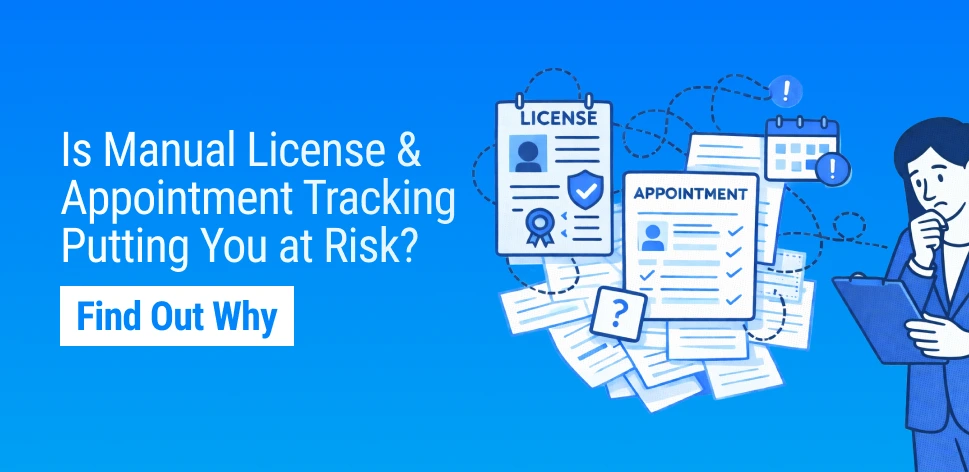
Manual Systems Appear to Work. Until They Don’t.
Many licensing teams rely on spreadsheets because they feel familiar and controllable. With enough experience and attention to detail, these systems can seem manageable, at least initially. But as organizations grow, producer counts increase, and state requirements change, the margin for error narrows.
Insurance License and Appointment Tracking
Insurance license tracking is the process of monitoring an insurance producer’s license status, renewal deadlines, continuing education (CE) requirements, carrier appointments, identifying information, and other licensing requirements.
Even well-maintained spreadsheets depend on manual entry, version control, and institutional knowledge. A single corrupted file, missed update, or delayed check can compromise thousands of records at once. These failures are not caused by lack of effort or expertise; they are the predictable result of systems that were never designed to scale.
Failure Is Systemic, Not Random
Instead of collapsing overnight, many organizations erode over time. In insurance, that erosion often shows up internally, through lack of oversight, delayed responses, and fragmented compliance tracking. Licensing and appointment management are especially vulnerable.
Manual licensing and appointment management erodes compliance operations by:
- Fragmenting critical license, appointment, and renewal information across multiple sources
- Reducing compliance status visibility, making it difficult to monitor deadlines accurately
- Increasing the risk of human error and overlooked licensing requirements
- Creating inconsistent processes across teams and employees
- Making it difficult to expand across states and carriers
Without centralized visibility, issues surface late, audits are triggered, or carriers decline business. At that point, the cost is no longer just administrative. It becomes financial, legal, and reputational.
The Human Cost of Licensing Burnout
Licensing administration is highly specialized work, often carried out by professionals with a decade or more of experience. Many teams are already stretched thin and replacing that expertise is increasingly difficult. Placement agencies report ongoing shortages, and virtual assistants often lack the training or documentation needed to step in quickly.
How Does Manual License Tracking Increase Administrative Burnout?
| Manual License Tracking Method | How it Increases Administrative Burden |
| Using spreadsheets to track renewal deadlines | Teams have to enter and monitor expiration dates themselves, making it easier to miss deadlines or discover upcoming renewals too late. |
| Manually updating licensing data | Updating producer records one by one takes valuable time and can leave records outdated when changes are missed. |
| Searching for licensing information across multiple sources | Teams may need to check multiple state and carrier sources to find the information they need, slowing down routine compliance work. |
| Manually reviewing records for errors | Reviewing records by hand takes time and makes it easier for discrepancies or outdated information to go unnoticed. |
| Researching state and carrier-specific requirements | Keeping track of different licensing, CE, renewal, and appointment requirements across states and carriers adds another layer of ongoing administrative work. |
When institutional knowledge lives primarily in spreadsheets and individual processes, turnover becomes a serious risk. The loss of a single administrator can leave organizations exposed, scrambling to reconstruct workflows under pressure.
Hidden Costs: Lost Time, Missed Opportunities, and Legal Exposure
Manual licensing processes including data entry, renewal tracking, appointment verification, and reconciliation across systems consume significant time each week. These hours are rarely visible on financial statements, but their impact is real.
More concerning is the risk of writing business without proper licensing or appointments in place. Unlicensed or unappointed selling can lead to:
- Regulatory penalties and fines
- Lost or delayed commissions and revenue
- Damaged relationships with carriers, producers, and clients
Regulatory fines often exceed earned commissions, and licensing gaps can create significant regulatory, contractual, and E&O exposure. Audits are also becoming more frequent, with some states signaling broader and more regular reviews of agencies, not just carriers or MGAs.
Regulatory Scrutiny Is Increasing
States are placing greater emphasis on real-time compliance, including license and appointment status at the time of binding. In some jurisdictions, agencies, not just carriers, are being held accountable for failures.
Requirements such as appointed agents-in-charge by branch location add further complexity. Tracking these obligations manually across states introduces risk that is difficult to defend after the fact. The question organizations must ask is not whether an audit will happen, but how prepared they are when it does.
From Reactive to Proactive Compliance
Proactive licensing management shifts compliance from periodic checks to ongoing visibility. Instead of discovering issues after business is written, teams can identify risks earlier and address them before they escalate.
What is the Difference Between Reactive and Proactive Compliance?
| Reactive Compliance | Proactive Compliance |
| Issues are discovered retroactively | Potential issues are identified and addressed before they escalate |
| Errors are investigated manually and periodically | License and appointment status is monitored continuously |
| Greater risk of missed requirements, last-minute issues, and compliance violations | Centralized visibility allows teams to identify risks and intervene earlier |
Proactive Compliance
Proactive compliance is the practice of continuously monitoring licensing and regulatory obligations to help insurance organizations identify potential risks and take action before they result in compliance issues or violations.
A proactive approach reduces fire drills, shortens onboarding timelines, and creates confidence across operations. Most importantly, it allows licensing teams to focus on oversight rather than constant remediation.
Summary
Manual license and appointment tracking is not a failure of people but a limitation of process. As insurance organizations grow and regulatory expectations rise, relying on spreadsheets increases operational risk and staff burnout. Sustainable compliance requires systems built for visibility, consistency, and scale. By addressing licensing proactively, organizations can protect their teams, their reputation, and their long-term stability.
FAQs
Q.1 What are the risks of manually tracking insurance licenses and appointments?
By increasing the chance of missed requirements, manual license tracking increases the risk of expired licenses, missed appointments, and other licensing gaps. This can lead to unauthorized selling, regulatory penalties, lost revenue, and reputational damage.
Q.2 How can manual license tracking lead to unlicensed selling?
Manual license tracking creates opportunities for changes in producer license status to be missed. If changes aren’t caught before a producer conducts business, the organization may inadvertently allow activity without the proper authorization.
Q.3 What happens if an insurance producer sells without a valid license?
Unlicensed selling can lead to regulatory fines and other enforcement actions, as well as delayed commissions. The need for internal investigation and remediation can also cost significant time and resources.
Q.4 Why is manual insurance license tracking difficult for multi-state organizations?
Because licensing requirements vary between states, multi-state license management may involve different expectations for renewal dates, continuing education, appointments, and other licensing requirements. As organizations scale, manually managing these differences becomes increasingly difficult.
Q.5 How does manual license tracking affect insurance compliance teams?
Manual license tracking increases administrative burden and takes time away from other important responsibilities. Time spent entering and updating records, verifying sources, and handling last-minute compliance issues prevents teams from focusing on proactive compliance work.
Allison is a Content Writer at Agenzee, creating blogs, case studies, social media content, and other value-driven materials to support overall marketing strategies and spur brand growth. Her storytelling expertise infuses her work with a clear, captivating voice that successfully drives conversion and engagement.
Educated in anthropology at Princeton University, Allison’s unique background in software solutions, fiction writing, ethnographic research, and tutoring gives her a unique perspective on the insurance licensing world, enabling her to pursue her mission: Making Agenzee the leader of insurance modernization.
Disclaimer: This post is for informational purposes only and does not constitute legal or compliance advice. Agenzee does not warrant the accuracy of and assumes no liability for reliance. Please consult regulators or professional advisors as needed. See our full disclaimer for details.
Subscribe
Stay Ahead with Agenzee Insights
Join our community to stay up-to-date on the latest news and strategies for license and appointment management
INDUSTRY INSIGHTS FOR INSURANCE AGENCIES, CARRIERS, AND MGAS
Similar Blogs
Read our blog to discover the latest industry insights and trends in license and appointment management.


let's catch up!
Schedule a Live 1-On-1
Demo of Agenzee!
Our insurtech experts would be thrilled to give you a personalized demo of how Agenzee can transform your compliance management processes.
Customers Opinions on Our Services and Products
What Our Customers Say
Find out why our customers are happy they chose Agenzee.