

Published On: July 27, 2026
Updated On: July 31, 2026
What Is Errors and Omissions (E&O) Insurance? A Guide for Insurance Agencies

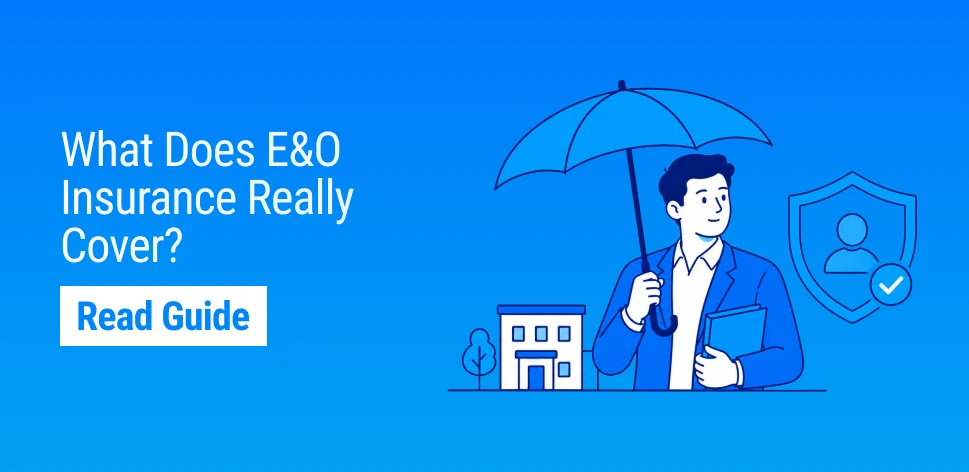
Errors and omissions (E&O) insurance is a type of professional liability coverage that protects individuals and businesses against claims involving negligence, errors, and omissions. E&O insurance typically protects against the financial and reputational losses that can result from professional oversight, rather than bodily injury or property damage.
E&O insurance provides important coverage for insurance agents and agencies. Because they advise clients, interpret policies, recommend coverage, process insurance transactions, and provide other complex policy-management services in a highly regulated environment, agencies are especially prone to E&O exposure. Obtaining E&O insurance provides agencies protection against potential losses due to mistakes, failed disclosures, lawsuits, and allegations.
Key Takeaways
- E&O insurance covers claims related to professional services, specifically allegations of negligence, errors, and omissions.
- Agencies need E&O insurance to stay compliant, avoid financial repercussions, and defend against E&O exposure.
- Poor documentation, miscommunication, missed coverage gaps, inconsistent workflow, and inadequate regulatory adherence can increase E&O exposure for insurance agencies.
- Agencies can reduce E&O risk by strengthening documentation, communication, industry knowledge, and workflow standardization.
What Errors and Omissions Insurance Does (and Does Not) Cover
While errors and omissions insurance is crucial for agencies, it does not protect against every professional liability. Whereas general liability (GL) insurance typically covers claims involving bodily injury, property damage liability, and certain personal or advertising injuries, E&O insurance protects agencies against claims arising from alleged errors, omissions, negligence, or failures in the performance of professional services.
E&O Insurance vs. General Liability Insurance
| E&O Coverage | General Liability Coverage |
|
|
Additionally, common E&O exclusions include intentional wrongdoing, fraud, criminal acts, and cyber incidents, in some cases.
Because they handle such sensitive and complex client data, agents and agencies may be at a higher risk for E&O exposure. Understanding the full scope of E&O insurance coverage can help agencies identify and mitigate risks not covered by other professional liability policies.
Definition — Negligence
E&O insurance typically covers negligence, which refers to the failure to exercise the proper standard of expected care in a certain profession, resulting in harm or financial loss to a client. For negligence to be established, a professional duty must be breached with damaging consequences to a client. However, intent is not necessary to establish negligence.
Definition — Misrepresentation
Misrepresentation is also typically covered by E&O insurance. It occurs when a professional communicates false, inaccurate, or misleading information to a client or third party in connection with their services provided. Misrepresentation may be classified as innocent, negligent, or fraudulent/intentional.
Why Do Agencies Need Errors & Omissions Insurance?
Insurance agents and agencies can benefit from errors and omissions insurance for multiple reasons, including: They face increased E&O exposure due to the nature of their profession, E&O insurance may be required for licensing and appointment compliance, and agencies may face significant financial consequences for failing to obtain E&O insurance.
Increased E&O Exposure
In general, every client interaction has the potential to increase professional liability for insurance agencies. Several factors increase E&O exposure, including:
- Increasingly complex insurance products require agencies to accurately understand and communicate policy terms, exclusions, and coverage options.
- Growing regulatory and carrier requirements demand accurate processes, detailed documentation, and compliance.
- Higher client expectations require timely service, clear communication, and tailored coverage recommendations.
- Administrative complexity complicates the management of applications, policy changes, renewals, endorsements, and client records across multiple carriers.
The risk introduced by insurance product, regulatory, and client relationship complexity increases the importance of E&O coverage for insurance agencies.
E&O Licensing Requirements
While E&O insurance is not universally required to obtain a producer license, some organizations, carriers, and state insurance departments require proof of E&O insurance before verifying insurance licenses, authorizing a carrier appointment, or otherwise validating a producer.
E&O insurance may be needed for:
- Certain license applications, depending on state-specific requirements for business entities or specialized licenses such as public adjusters, surplus lines brokers, or MGAs.
- Obtaining carrier appointments, as carriers want to reduce their exposure to professional liability claims.
- Joining an insurance organization such as an agency, MGA, IMO, or FMO that requires its producers to carry E&O insurance policies.
These potential E&O licensing requirements mean that E&O insurance is not only important for legal protection against professional risk, it may be an essential part of the producer authorization process.
E&O Financial Consequences
Finally, if agencies fail to obtain E&O coverage, their protection against client allegations may be limited, leaving them financially responsible for the costs of professional mistakes.
Financial consequences without E&O insurance can include:
- Legal defense costs, including attorney fees, court costs, and other legal expenses.
- Settlements and judgments resulting from professional negligence claims.
- Client compensation for uncovered losses, if a mistake caused a coverage gap.
- Reputational damage, leading to reduced client retention, acquisition, and business opportunities.
E&O exposure can make it difficult for insurance agencies to obtain carrier appointments, validate producer licenses, and maintain financial security. However, agencies often increase their E&O exposure unknowingly. How do agencies unintentionally increase E&O exposure?
What Are Common Errors and Omissions Mistakes, and How Can Agencies Fix Them?
Insurance agencies may unintentionally increase errors and omissions exposure through operational and compliance gaps that go unnoticed. Common E&O mistakes include:
1. Failing to Document Client Interactions
Failing to fully document client interactions prevents agencies from having the evidence they need to defend an E&O claim. Careful documentation at every stage of the client relationship can help agencies provide evidence of what was requested, recommended, and completed to defend against allegations of professional negligence.
| The Error: Poor Documentation | The Fix: Thorough Documentation |
|
|
Real-World Claims Scenario:
An insurance agent recommends additional coverage to a client during a policy review, but the client declines. However, the agent fails to document evidence of the recommendation or the client’s response.
When the client suffers a loss and discovers they are not covered, they accuse the agent of failing to recommend coverage. Without documentation of their recommendation, the agent struggles to defend against the E&O claim.
2. Miscommunicating Coverage and Client Expectations
Many E&O claims come from misunderstandings or unmet client expectations. Clearly explaining policy coverage and exclusions can help prevent disputes after a loss occurs, ensure clients make informed coverage decisions, and reduce the misunderstandings that can lead to E&O claims.
| The Error: Miscommunication | The Fix: Clear Communication |
|
|
Real-World Claims Scenario:
An insurance agent never clearly explains that a client’s insurance policy does not cover a certain type of loss. After experiencing a loss that is not covered, the client files a claim with their insurer.
When the claim is denied, the client accuses the agency of failing to adequately explain the policy. Because the agent failed to clearly communicate coverage exclusions, the client did not fully understand the coverage they were purchasing.
3. Failing to Identify Coverage Gaps
Failing to identify potential coverage gaps can leave clients underinsured or without adequate protection, increasing the likelihood of E&O claims. Failing to complete risk assessments, recommend appropriate coverage, discuss exclusions or limitations, and verify client needs may cause an agency to fail to meet client needs.
| The Error: Failed Coverage Assessment | The Fix: Comprehensive Risk Assessments |
|
|
Real-World Claims Scenario:
A client buys commercial insurance. As the business continues to grow and change over time, the agent continues to renew the same policy, failing to check if the coverage still fits the client’s situation.
The client experiences an uncovered loss and blames the agency for not identifying the gap. Because the agent did not update the client’s coverage as their needs changed, the client ended up underinsured, causing them to file an E&O claim against the agent.
4. Inconsistent Internal Workflows
Inconsistent internal processes may increase E&O risk for insurance agencies. Implementing standardized procedures can help agencies reduce human error, improve documentation consistency, flag mistakes, and promote consistent client service. Using workflow automation can support standardization, helping agencies reduce the operational inconsistencies that frequently contribute to E&O exposure.
| The Error: Inconsistent Workflows | The Fix: Standardized Workflows |
|
|
Real-World Claims Scenario:
A client requests a policy change adding a certain type of coverage to their policy. However, due to inconsistent internal processes, the request is not properly submitted to the carrier.
After experiencing an uncovered loss, the client realizes the policy was never properly updated, leaving the client without adequate coverage. The client files an E&O claim against the agency.
5. Failing to Adapt to Evolving Regulatory Requirements
Insurance regulations and compliance requirements are continuously evolving. Without sufficient awareness of changing regulatory requirements and carrier expectations, agencies may make errors that increase E&O exposure. Staying up to date with regulatory changes can help agencies understand current industry standards, improve recommendations, and reduce the risk of unintentionally violating professional standards or licensing requirements.
| The Error: Missed Regulatory Changes | The Fix: Ongoing Compliance Monitoring |
|
|
Real-World Claims Scenario:
A carrier updates its insurance requirements, including new disclosures or updated forms. Unaware of the change, the agency continues using outdated procedures across its workflows and issues a policy without the required updated disclosures or documentation.
Because the agency’s processes were misaligned with current carrier requirements, it failed to meet compliance standards, leading the client to file an E&O claim against the agency.
Strengthen Operations to Reduce Errors and Omissions Risk
Errors and omissions insurance provides important financial protection after a professional liability claim occurs. However, agencies can begin preventing E&O claims by building a strong foundation to streamline operations.
Centralizing licensing, carrier appointment management, compliance tracking, and documentation with modern licensing software can help agencies improve consistency, reduce administrative errors, and maintain accurate records throughout the producer lifecycle.
By automating routine compliance tasks, standardizing internal workflows, and increasing visibility into licensing and appointment requirements, agencies can proactively reduce many of the operational gaps that contribute to E&O exposure.
Summary
Errors and omissions insurance protects agencies from claims of inadequate professional services including negligence, misrepresentation, and flawed recommendations. Importantly, criminal acts, physical injury, and other events may not be covered by E&O insurance, falling into other categories of professional liability coverage.
Obtaining E&O insurance is important for protecting against E&O exposure, staying compliant with certain licensing requirements, and avoiding the financial and reputational consequences of professional liability allegations. By maintaining thorough documentation, communicating clearly with clients, staying current on industry regulations, and standardizing internal workflow with automation software, agencies can reduce E&O exposure and better protect their clients, reputation, and business.
FAQs
Q.1 What’s the difference between E&O insurance and general liability coverage?
General liability insurance typically covers physical or property damage liability, while E&O insurance covers claims related to professional negligence, errors, or omissions.
Q.2 Why do insurance agencies face increased E&O exposure?
Insurance agencies face increased E&O exposure due to the highly personal, complex, and regulated nature of the insurance industry.
Q.3 How can poor documentation increase E&O exposure?
Poor documentation of client recommendations, requests, conversations, or confirmations can leave an agency without adequate evidence to defend against E&O claims.
Q.4 How does automation reduce E&O exposure?
Automation can help streamline internal workflows and standardize documentation and servicing processes to reduce E&O exposure.
Q.5 What are some of the most common E&O claims?
Common E&O claims include poorly communicated coverage, inadequate coverage recommendations, administrative errors, missed deadlines, and renewal mistakes.
Allison is a Content Writer at Agenzee, creating blogs, case studies, social media content, and other value-driven materials to support overall marketing strategies and spur brand growth. Her storytelling expertise infuses her work with a clear, captivating voice that successfully drives conversion and engagement.
Educated in anthropology at Princeton University, Allison’s unique background in software solutions, fiction writing, ethnographic research, and tutoring gives her a unique perspective on the insurance licensing world, enabling her to pursue her mission: Making Agenzee the leader of insurance modernization.
Disclaimer: This post is for informational purposes only and does not constitute legal or compliance advice. Agenzee does not warrant the accuracy of and assumes no liability for reliance. Please consult regulators or professional advisors as needed. See our full disclaimer for details.
Subscribe
Stay Ahead with Agenzee Insights
Join our community to stay up-to-date on the latest news and strategies for license and appointment management
INDUSTRY INSIGHTS FOR INSURANCE AGENCIES, CARRIERS, AND MGAS
Similar Blogs
Read our blog to discover the latest industry insights and trends in license and appointment management.

let's catch up!
Schedule a Live 1-On-1
Demo of Agenzee!
Our insurtech experts would be thrilled to give you a personalized demo of how Agenzee can transform your compliance management processes.
Customers Opinions on Our Services and Products
What Our Customers Say
Find out why our customers are happy they chose Agenzee.