

Published On: September 30, 2026
Updated On: October 14, 2026
South Dakota Expands Licensing Requirements for Reinsurance Intermediaries

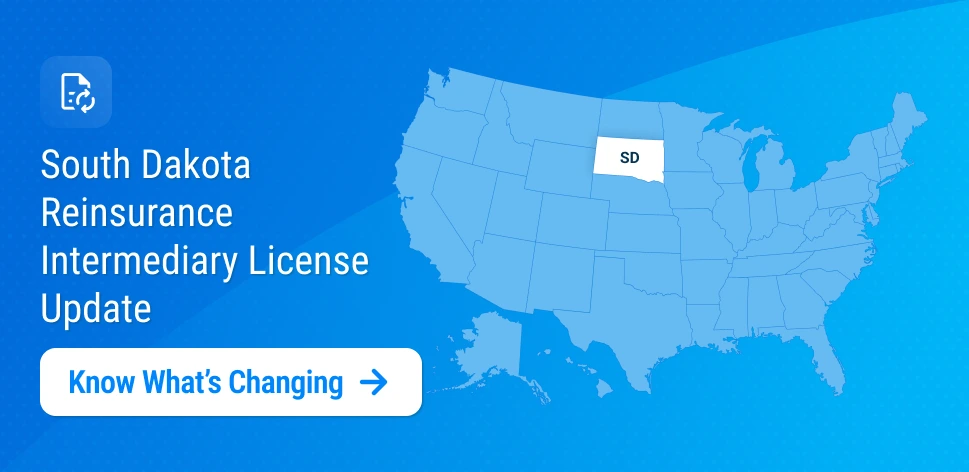
South Dakota will introduce a Reinsurance Intermediary license class on October 9, 2026. Along with the new license class, the state is updating several business entity and DRLP requirements. Reinsurance Intermediary applicants will need an appropriately licensed DRLP. Meanwhile, business entities must meet updated licensing conditions before submitting applications. The changes include renewal and appointment provisions for the new license class. Before the effective date, review entity and producer records to understand how the new requirements affect ongoing licensing activity.
A New License Class Takes Effect October 9
South Dakota is adding Reinsurance Intermediary as a license class for both resident and non-resident licensing. The change, which takes effect October 9, 2026, applies to licensing, renewals, appointments, and terminations.
Organizations working with reinsurance intermediaries need to incorporate this new licensing category into existing compliance processes. Licensing teams may need to review current records and identify individuals or business entities that will require the new license.
DRLP Requirements Are Also Changing
The update includes specific requirements for business entities applying for a Reinsurance Intermediary license.
A Reinsurance Intermediary business entity must have at least one Designated Responsible Licensed Producer with an active Reinsurance Intermediary license. The DRLP must also hold an active South Dakota license before submitting an online application.
South Dakota’s DRLP requirements apply to business entities more broadly. At least one DRLP for a business entity must hold an active Insurance Producer license with a corresponding line of authority.
These requirements make connecting business entity and individual producer licenses particularly important.
Renewal and Appointment Activity Will Be Affected
The new license class will affect South Dakota’s renewal and appointment processes.
Both individual and business entity Reinsurance Intermediary licenses will have renewal dates, including a late renewal period of up to one year after expiration. After that period, a new application is required.
The license class will also require appointments and terminations. When managing appointment activity, account for the new license class when reviewing producer and entity records to determine the license status.
What Licensing Teams Should Review
There’s still time before the October 9 effective date to review records. Identify current or prospective Reinsurance Intermediaries, confirm the appropriate DRLP information, and verify that South Dakota licenses Reinsurance Intermediary licenses are active by the deadline.
Staff may need to add internal workflows for applications, renewals, appointments, and terminations for the new license class. Adding a new license class affects the initial application as well as how records are monitored for regulatory compliance.
The Details Matter
South Dakota’s update is an example of why state licensing requirements cannot always be managed through standardized processes. A new license class can introduce additional requirements for business entities, DRLPs, renewals, and appointments.
Keeping state specific requirements visible within the licensing process helps teams prepare for changes before they become an issue. For organizations managing multiple license types and jurisdictions, visibility makes it easier to identify urgent tasks and keep licensing activity moving.
Summary
South Dakota’s addition of the October 9, 2026, Reinsurance Intermediary license class introduces several related licensing changes. The update affects business entity applications, DRLP requirements, renewals, appointments, and terminations. Licensing teams should review applicable producer and entity records before the effective date to ensure processes account for the new requirements. State specific changes like this remind us that maintaining accurate licensing information is an ongoing compliance responsibility.
Laura Crowell is a seasoned insurance professional with over 25 years of experience specializing in agency contracting, licensing, and appointment management. As Insurance Licensing Administrator at Agenzee, Laura brings her hands-on industry experience to the development of technology that helps insurance organizations and professionals manage licensing, contracting, appointments, compliance, and related operational processes more efficiently.
With a background in education, a P&C license, and a CPSR designation, Laura understands the importance of clear communication, effective training, and organized, reliable information. She works closely with customers and internal teams to identify opportunities to improve processes, strengthen the user experience, and make insurance technology more practical for the people who use it every day.
Laura is passionate about helping simplify the administrative complexity of insurance operations and supporting technology that brings information, processes, and people together. Her goal is to help insurance professionals spend less time managing administrative processes and more time focused on the work that matters.
Disclaimer: This post is for informational purposes only and does not constitute legal or compliance advice. Agenzee does not warrant the accuracy of and assumes no liability for reliance. Please consult regulators or professional advisors as needed. See our full disclaimer for details.
Subscribe
Stay Ahead with Agenzee Insights
Join our community to stay up-to-date on the latest news and strategies for license and appointment management
INDUSTRY INSIGHTS FOR INSURANCE AGENCIES, CARRIERS, AND MGAS
Similar Blogs
Read our blog to discover the latest industry insights and trends in license and appointment management.

let's catch up!
Schedule a Live 1-On-1
Demo of Agenzee!
Our insurtech experts would be thrilled to give you a personalized demo of how Agenzee can transform your compliance management processes.
Customers Opinions on Our Services and Products
What Our Customers Say
Find out why our customers are happy they chose Agenzee.