

Published On: September 21, 2026
Updated On: September 22, 2026
Avoiding Common License Management Mistakes That Cause Carrier Delays

The Details Matter More Than We Think
License management often involves information coming from several places, including state departments of insurance, NIPR, carriers, agencies, producers, and internal systems.
That creates plenty of opportunities for information to become outdated or inconsistent.
A producer may have changed addresses. An agency may have updated its legal name. A license may show one business entity name while contracting documentation uses another. A required document may be missing from the file even though the producer has completed the licensing process.
While none of these issues necessarily represent a major compliance problem on their own, they can still stop a carrier appointment or contracting request from moving forward until someone investigates and corrects the information.
The best time to catch these issues is before the carrier does.
Outdated Records Create Questions
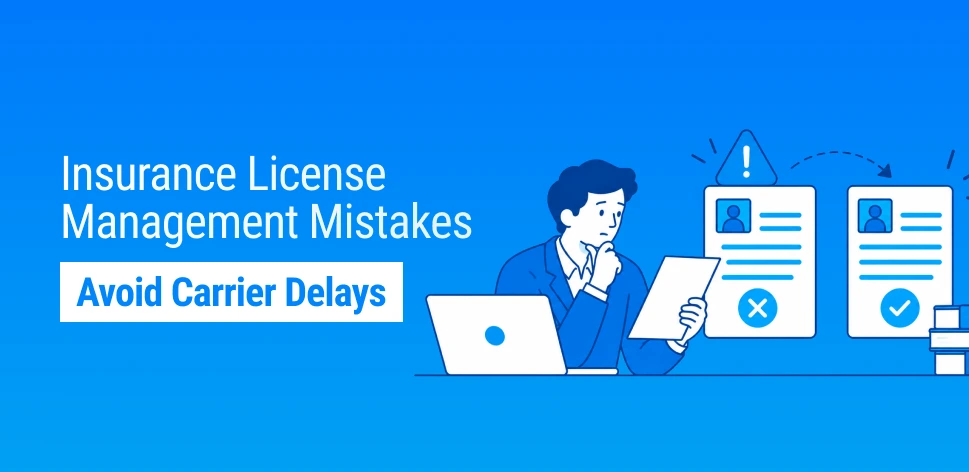
One of the most common challenges in license management is simply working with information that is no longer current.
Contact information, legal names, license status, lines of authority, and other producer details can change over time. When those changes are not reflected consistently across records, a carrier may need additional information before completing the contracting or appointment process.
This potential setback can be particularly important for organizations managing a large producer population. With hundreds or even thousands of records to maintain, small changes can easily go unnoticed. Information that was accurate when a producer was onboarded may change over time, leaving the agency with a record that no longer reflects the current information.
Regularly reviewing producer and agency information gives licensing teams an opportunity to identify changes and maintain accurate records before those changes become an obstacle to contracting, appointments, or other transactions.
Missing Documentation Can Stop the Process
Keeping licensing information accurate is important, but it’s only part of the picture.
Carrier contracting and appointment processes may require supporting documentation, and requirements vary by carrier and state. If carriers find a missing form, incomplete application, incorrect document, or outdated information, they may send back a request for additional information.
That creates more than just an inconvenience. Every additional request means someone must research the issue, locate the correct information, make the update, and resubmit the request.
A good appointment management process includes a documentation checklist appropriate to the transaction being completed. It also helps to keep documentation organized and accessible, so the licensing team is not searching through emails or individual files when a carrier requests something.
Mismatched Entity Data Is an Easy One to Miss
Entity information deserves particular attention.
An agency or business entity may appear under its legal name in one system and under a DBA or different version of the name somewhere else. Inconsistencies in tax identification numbers, addresses, ownership details, and other entity data can also create discrepancies between records.
These discrepancies become more noticeable when information is compared during contracting or appointment processing. A mismatch may result in additional questions, documentation requests, or a delay while the information is researched and corrected.
For licensing teams, taking the time to verify key entity details before submitting business to a carrier can help prevent these issues from slowing down the process. A strong license management process should make it easier to compare entity information and identify discrepancies before they become a problem.
Create a Process That Catches Problems Early
Overall, the goal is not to eliminate every possible licensing error. That is not realistic in a business where information and requirements vary by state and carrier.
The goal is to make errors easier to find and resolve.
A practical review process can include:
- Keeping producer and entity information current
- Reviewing license status before initiating carrier transactions
- Confirming required lines of authority
- Checking documentation for completeness
- Comparing entity information across systems
- Tracking outstanding items through completion
- Documenting changes and follow up activity
Centralizing this information can also make it easier to see what needs attention. Workflow and task management tools can help licensing teams track outstanding items rather than relying on individual inboxes, spreadsheets, or memory. The goal is visibility, knowing what has been completed, what is still outstanding, and where additional attention is needed.
Summary
Carrier delays are not always caused by complex licensing requirements. Sometimes they begin with something much simpler: an outdated record, a missing document, or information that does not match.
For licensing teams, the most effective approach is to build consistency into the process. Review information before it is needed, maintain accurate records, organize documentation, and track outstanding tasks through completion.
A few minutes spent identifying a discrepancy early can save considerably more time later.
Good license management is not just about knowing whether a producer holds a license. It is about maintaining accurate, complete information that allows the next step in the process to move forward with fewer questions and fewer delays.
Laura Crowell is a seasoned insurance professional with over 25 years of experience specializing in agency contracting, licensing, and appointment management. In her role as Insurance Licensing Administrator at Agenzee, Laura helps streamline processes, enhance customer engagement, and support innovation in licensing and appointment management technology.
With a background in education, a P&C license, and a CPSR designation, Laura brings a strong understanding of the importance of training, communication, and organized data management. She is dedicated to delivering an easy-to-use SaaS platform that simplifies licensing operations and enables administrators to focus on higher-value work.
Disclaimer: This post is for informational purposes only and does not constitute legal or compliance advice. Agenzee does not warrant the accuracy of and assumes no liability for reliance. Please consult regulators or professional advisors as needed. See our full disclaimer for details.
Subscribe
Stay Ahead with Agenzee Insights
Join our community to stay up-to-date on the latest news and strategies for license and appointment management
INDUSTRY INSIGHTS FOR INSURANCE AGENCIES, CARRIERS, AND MGAS
Similar Blogs
Read our blog to discover the latest industry insights and trends in license and appointment management.


let's catch up!
Schedule a Live 1-On-1
Demo of Agenzee!
Our insurtech experts would be thrilled to give you a personalized demo of how Agenzee can transform your compliance management processes.
Customers Opinions on Our Services and Products
What Our Customers Say
Find out why our customers are happy they chose Agenzee.