

Published On: July 7, 2026
Updated On: July 10, 2026
Best Practice: Reducing Compliance Risk Through Automation

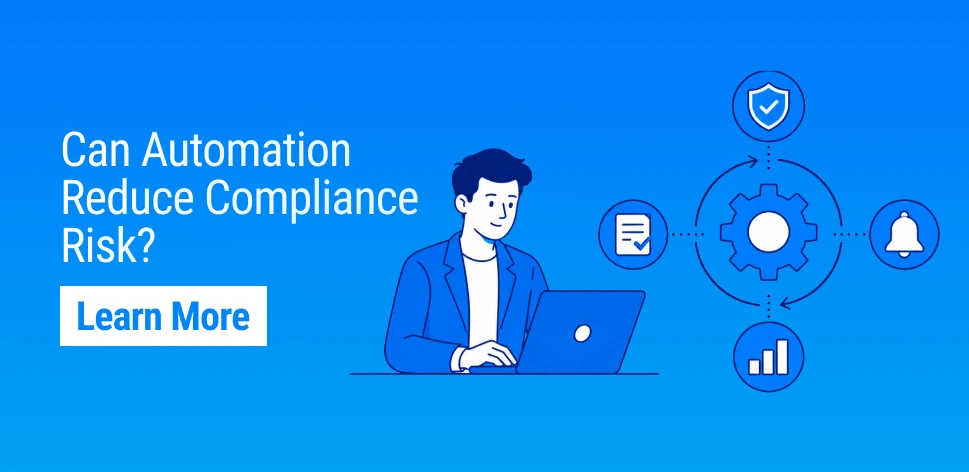
As insurance organizations grow, compliance responsibilities grow with them. Additional producers, carriers, states, appointments, renewals, continuing education requirements, and regulatory changes all increase operational complexity. While many organizations continue relying on spreadsheets and email to manage these responsibilities, manual processes often introduce unnecessary risk and reduce operational visibility. Automation provides a structured approach to managing licensing workflows by centralizing information, reducing repetitive administrative work, improving collaboration, and helping organizations identify potential issues before they affect producers, customers, or business operations.
Why Automation Has Become the Best Practice
Insurance licensing is no longer a simple administrative task. Every producer may hold resident and nonresident licenses across multiple states, maintain several lines of authority, complete continuing education at different intervals, and represent numerous carriers with unique appointment requirements.
None of these responsibilities are especially difficult individually. The challenge comes from managing hundreds or even thousands of moving pieces simultaneously.
Organizations often reach a point where additional staff alone no longer solve the problem. Instead, every new producer creates additional spreadsheets, emails, reminders, and manual reviews. Eventually, the process becomes more difficult to manage than the licensing requirements themselves.
Automation addresses this challenge by creating consistent workflows that allow licensing professionals to focus on reviewing exceptions rather than manually tracking routine activities.
Manual Processes Create Hidden Operational Risk
Many compliance issues begin long before a deadline is missed.
A spreadsheet may still display yesterday’s information. A renewal reminder may remain buried in a shared mailbox. A producer may appear ready to sell even though an appointment is still pending. None of these situations occur because employees are careless. They occur because manual systems rely on people to remember every task across hundreds of producers and multiple jurisdictions.
Automation shifts that responsibility from memory to process.
When licensing data, appointments, continuing education, renewal schedules, and internal tasks are centralized, organizations gain visibility into potential issues while there is still time to address them.
Manual vs. Automated Compliance Management
| Manual Process | Automated Workflow |
| Spreadsheets updated manually | Centralized producer records updated through connected data sources |
| Calendar reminders managed individually | Automated notifications based on defined workflows |
| Multiple email threads | Shared task management and dashboard visibility |
| Manual status verification | Real-time visibility into producer readiness |
| Time-consuming audit preparation | Centralized activity history and documentation |
Automation Supports People, It Does Not Replace Them
One of the biggest misconceptions about automation is that software replaces licensing professionals.
The opposite is usually true.
Experienced licensing administrators understand state regulations, carrier requirements, producer onboarding, and regulatory expectations better than any software ever could. Automation simply removes repetitive administrative work so those professionals can spend more time solving exceptions, supporting producers, and improving operational performance.
Instead of searching multiple systems to answer a single question, licensing teams can spend their time making informed decisions using reliable information.
Automation supports consistency. Licensing professionals provide judgment.
Together, they create a stronger compliance program.
Build a More Resilient Compliance Operation
Organizations rarely regret improving visibility before growth creates complexity.
Whether managing fifty producers or several thousand, the most successful insurance organizations share a common characteristic: they build repeatable processes before manual tracking becomes a business risk.
Automation creates a centralized source of truth, improves collaboration between departments, reduces administrative effort, and helps licensing teams respond proactively instead of reactively.
Reducing compliance risk is not simply about avoiding regulatory issues. It is about creating an operational foundation that allows the business to grow with confidence.
Frequently Asked Questions
Q.1 Does automation replace licensing administrators?
No. Automation reduces repetitive administrative work while allowing licensing professionals to focus on reviewing exceptions, managing complex licensing situations, and supporting producers.
Q.2 What compliance activities benefit most from automation?
Organizations commonly automate license tracking, appointment management, renewal reminders, continuing education monitoring, task management, audit documentation, and workflow notifications.
Q.3 When should an insurance organization automate licensing workflows?
The best time is before manual processes begin creating delays or reducing visibility. Organizations often realize the greatest value when producer growth, expansion into additional states, or increasing carrier relationships make spreadsheets difficult to maintain.
Conclusion
Automation is not the goal. Better operational control is.
Insurance organizations that invest in structured licensing workflows position themselves to reduce administrative burden, improve collaboration, strengthen audit readiness, and better support producers as they grow. By automating routine activities while keeping licensing professionals at the center of the decision-making process, organizations create a more scalable and resilient compliance operation.
Laura Crowell is a seasoned insurance professional with over 25 years of experience specializing in agency contracting, licensing, and appointment management. As Insurance Licensing Administrator at Agenzee, Laura brings her hands-on industry experience to the development of technology that helps insurance organizations and professionals manage licensing, contracting, appointments, compliance, and related operational processes more efficiently.
With a background in education, a P&C license, and a CPSR designation, Laura understands the importance of clear communication, effective training, and organized, reliable information. She works closely with customers and internal teams to identify opportunities to improve processes, strengthen the user experience, and make insurance technology more practical for the people who use it every day.
Laura is passionate about helping simplify the administrative complexity of insurance operations and supporting technology that brings information, processes, and people together. Her goal is to help insurance professionals spend less time managing administrative processes and more time focused on the work that matters.
Disclaimer: This post is for informational purposes only and does not constitute legal or compliance advice. Agenzee does not warrant the accuracy of and assumes no liability for reliance. Please consult regulators or professional advisors as needed. See our full disclaimer for details.
Subscribe
Stay Ahead with Agenzee Insights
Join our community to stay up-to-date on the latest news and strategies for license and appointment management
INDUSTRY INSIGHTS FOR INSURANCE AGENCIES, CARRIERS, AND MGAS
Similar Blogs
Read our blog to discover the latest industry insights and trends in license and appointment management.

let's catch up!
Schedule a Live 1-On-1
Demo of Agenzee!
Our insurtech experts would be thrilled to give you a personalized demo of how Agenzee can transform your compliance management processes.
Customers Opinions on Our Services and Products
What Our Customers Say
Find out why our customers are happy they chose Agenzee.