
Published On: August 19, 2026
Updated On: August 21, 2026
Hurricane Season Is Here, Are Your Compliance Processes Ready for the Surge?

Hurricane season creates a unique operational challenge for insurance organizations. Business activity can increase quickly, teams may need to respond across multiple states, and licensing and appointment requests can multiply in a short period of time. When work accelerates, even experienced teams can find it difficult to maintain the same level of accuracy and oversight. Preparing compliance workflows before activity increases gives organizations a better way to manage volume, identify outstanding requirements, and keep important tasks moving without losing control.
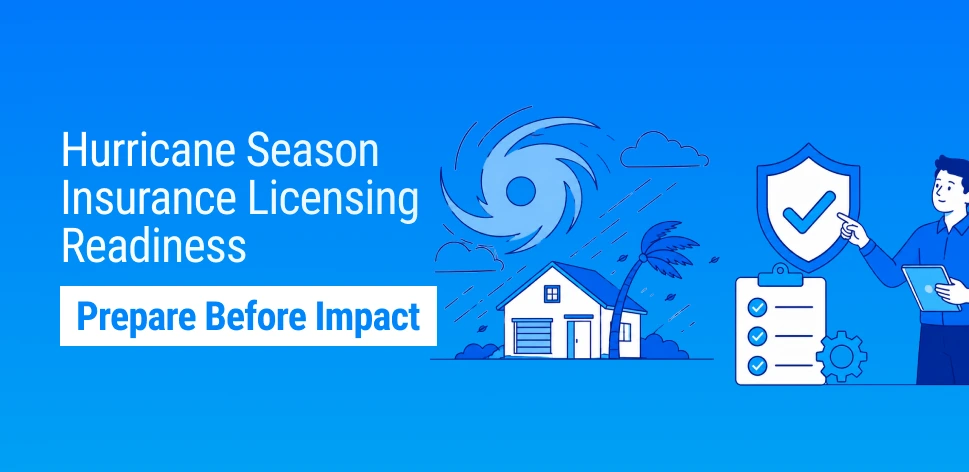
When Activity Surges, So Does Compliance Risk
Hurricane season does not just bring changes in weather. It can bring a significant increase in insurance business activity and compliance.
As storms develop, insurance organizations may experience increased policy activity, claims volume, producer activity, and demand for additional resources. More activity means more transactions and more compliance touchpoints.
And when the volume of work increases quickly, the likelihood of errors increases with it.
A missed follow up, an incomplete record, a delayed appointment, or an overlooked licensing requirement may seem like a small administrative issue. During a high-volume period, however, small issues can quickly create larger operational problems.
The challenge is maintaining accuracy while the pace of business changes.
More Business Means More Compliance Touchpoints
Every additional producer or transaction can create another task for a licensing or compliance team. A producer may need an appointment. A license may need to be verified. Documentation may need to be collected. A state requirement may need to be reviewed.
Under normal circumstances, these activities may be manageable through existing processes. During peak activity, the number of requests can increase faster than the team can manually track them.
This is where organizations can find themselves relying heavily on spreadsheets, email chains, individual reminders, and manual status checks. The more volume increases, the more difficult it becomes to maintain a complete picture of what is finished and what still requires attention.
Appointment Bottlenecks Can Slow Everything Down
Appointments can become a particular pressure point during periods of increased activity.
When organizations need producers or adjusters ready to conduct business in additional states, appointment requests can increase rapidly. Each request may require specific information, licensing verification, processing, and follow up.
If those requests are managed individually without a consistent workflow, bottlenecks can develop quickly.
A strong license management process should allow teams to identify where each appointment stands, what information is still needed, who owns the next step, and which requests need attention.
This matters because a delayed appointment can keep a producer from doing business and make it harder for an organization to get the right resources where they are needed.
Scale Without Losing Control
Peak hurricane season should not require organizations to abandon their normal compliance processes.
In fact, it is the time when those processes matter most.
- Organizations that expect periods of increased activity during hurricane season should establish repeatable workflows before they are needed. Routine tasks should have defined steps, clear ownership, and appropriate deadlines.
- Task management can help teams see what is outstanding and prevent responsibilities from becoming dependent on memory.
- Workflow automation can take that process a step further by helping generate recurring tasks, reminders, notifications, and other routine activities automatically.
This does not mean every compliance decision should be automated. Regulatory requirements still require knowledgeable people to review information and make appropriate decisions.
Automation simply helps reduce the amount of administrative work surrounding those decisions.
Prepare Before the Pressure Arrives
The best time to identify weaknesses in a high-volume process is before the volume increases.
Organizations can use the weeks leading into peak hurricane activity to review their licensing and compliance workflows.
Ask practical questions:
- Where do appointment requests tend to slow down?
- Which tasks depend on manual follow up?
- Are licensing records easy to access and verify?
- Can the team quickly identify outstanding requirements?
- What happens when the volume of requests doubles?
- Who is responsible for monitoring work that remains incomplete?
These questions can reveal where a process may struggle under pressure.
The goal is not to predict exactly what a hurricane will bring. It is to make sure the organization has enough structure to respond when activity changes unexpectedly.
Technology Can Support the Process
Technology can provide additional support when organizations need to manage more work without adding unnecessary administrative steps.
Implementing workflow automation and task management can help teams organize compliance activities, assign responsibility, establish deadlines, and maintain visibility into outstanding work.
For example, a platform such as Agenzee can support licensing workflows by helping teams centralize tasks and automate routine activities. Technology does not replace the compliance process. It gives teams a better way to manage that process as activity increases.
What matters is whether technology supports a process that gives the organization visibility, accountability, and control.
Summary
Hurricane season can put insurance organizations under significant operational pressure.
As activity increases, so do the number of licensing, appointment, and compliance tasks that need to be completed. Without a process designed to handle higher volume, errors and bottlenecks can quickly follow.
Preparation does not mean knowing exactly when or where a storm will create increased demand. It means having processes in place that can absorb that demand without losing visibility.
Optimized workflows, centralized task management, defined ownership, and appropriate automation can help organizations scale their operations while maintaining compliance.
When business activity surges, the organizations that are prepared to manage the work are better positioned to manage the risk.
Laura Crowell is a seasoned insurance professional with over 25 years of experience specializing in agency contracting, licensing, and appointment management. In her role as Insurance Licensing Administrator at Agenzee, Laura helps streamline processes, enhance customer engagement, and support innovation in licensing and appointment management technology.
With a background in education, a P&C license, and a CPSR designation, Laura brings a strong understanding of the importance of training, communication, and organized data management. She is dedicated to delivering an easy-to-use SaaS platform that simplifies licensing operations and enables administrators to focus on higher-value work.
Disclaimer: This post is for informational purposes only and does not constitute legal or compliance advice. Agenzee does not warrant the accuracy of and assumes no liability for reliance. Please consult regulators or professional advisors as needed. See our full disclaimer for details.
Subscribe
Stay Ahead with Agenzee Insights
Join our community to stay up-to-date on the latest news and strategies for license and appointment management
INDUSTRY INSIGHTS FOR INSURANCE AGENCIES, CARRIERS, AND MGAS
Similar Blogs
Read our blog to discover the latest industry insights and trends in license and appointment management.

let's catch up!
Schedule a Live 1-On-1
Demo of Agenzee!
Our insurtech experts would be thrilled to give you a personalized demo of how Agenzee can transform your compliance management processes.
Customers Opinions on Our Services and Products
What Our Customers Say
Find out why our customers are happy they chose Agenzee.