
Published On: August 6, 2026
Updated On: August 12, 2026
Optimizing Producer Onboarding Through Centralized License Validation

There’s more to producer onboarding than collecting information and completing administrative tasks. Organizations must review licensing details, manage documentation, coordinate internal requirements, and understand when a producer is ready to begin applicable business activities.
However, when teams manage these responsibilities through disconnected emails, spreadsheets, and manual follow ups, delays and communication gaps can occur.
In contrast, centralized license validation helps bring key information into a more organized process, improving visibility and supporting more consistent onboarding practices. A connected approach can reduce administrative effort while helping organizations identify potential concerns earlier.
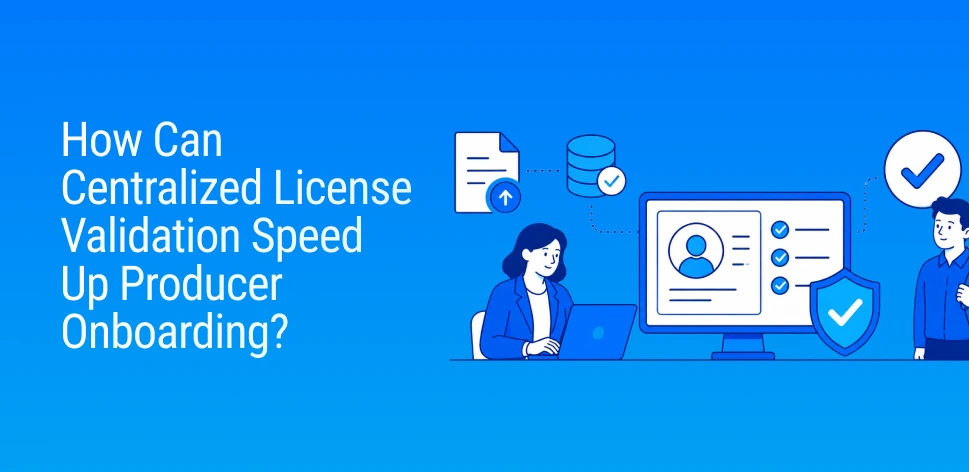
Why a Connected Producer Onboarding Process Matters
Producer onboarding is a critical part of preparing individuals to represent an organization, serve clients, and begin business activities.
The process may include collecting professional information, reviewing licensing details, managing required documentation, completing internal setup, and addressing compliance responsibilities. When managing these activities separately, teams may spend unnecessary time searching for information, requesting updates, and determining which requirements remain incomplete.
In practical terms, the goal of a streamlined onboarding process is not simply to move producers through the process faster. Instead, it is to create a consistent experience that supports the producer while giving internal teams greater visibility into readiness.
Centralized license validation can support this goal by making relevant licensing information easier to access and review. When licensing details connect to the onboarding process, organizations can identify potential questions earlier and reduce the possibility of discovering an issue after a producer is expected to begin work.
A more connected process helps organizations focus on onboarding, preparing producers for success while supporting responsible licensing and compliance practices.
Centralize License Validation to Improve Visibility
License validation is another central part of producer onboarding. Organizations need reliable licensing information to understand whether a producer holds the appropriate credentials for the responsibilities they are about to perform.
A centralized process can help authorized teams review relevant information without relying on repeated manual searches or maintaining multiple versions of the same records.
Centralized license validation may help organizations review:
- Current license status
- States in which the producer is licensed
- Relevant lines of authority
- License expiration information
- Licensing details connected to the producer’s role
- Potential gaps that may require additional review
Efficiency is not the only benefit. Beyond faster onboarding, centralized information can improve consistency by providing licensing, compliance, operations, and management teams with a shared view of relevant information and a sole source of truth.
Notably, early validation also creates time to address missing information or determine whether additional action is necessary. This can help reduce delays and support a more organized onboarding experience.
Connect Licensing Information and Documentation
License validation is most effective when it is part of a broader onboarding workflow.
This means that licensing information should relate to other onboarding requirements so teams can understand the producer’s overall progress, rather than reviewing each activity in isolation.
A streamlined workflow may include:
| Onboarding Activity | Best Practice |
| Producer information | Collect required professional information through a consistent process |
| License validation | Review relevant licensing information early |
| Required disclosures | Provide applicable notices and obtain required authorization |
| Documentation | Collect and organize required records |
| Internal review | Confirm that licensing and documentation requirements have been addressed |
| Producer readiness | Complete a final review before applicable business activities begin |
One of the primary advantages of a connected workflow is that it helps teams identify which requirements are complete, which activities remain pending, and who is responsible for the next action.
Another benefit of centralized documentation is that it can also reduce duplicate requests and make important records easier for authorized team members to locate. Producers benefit from clear instructions about what information is required and when to submit it.
Reduce Delays Through Clear Ownership
At their core, many onboarding delays result from unclear responsibilities and limited visibility.
A producer may be under the impression that they have submitted all required information, while an administrator waits silently for an additional document. Likewise, a manager may assume licensing has been reviewed while the licensing team is waiting for information from another source.
Clear ownership helps prevent these gaps.
Each onboarding activity should have an identified owner, whether that is the producer, a manager, a licensing professional, a compliance team member, or an operations administrator.
Organizations should also establish clear milestones, including:
- Producer information received
- Licensing information validated
- Required disclosures completed
- Required authorization received
- Documentation reviewed
- Internal setup completed
- Final readiness review completed
These milestones help teams understand where a producer is within the onboarding process and provide greater accountability for the next required action.
Conclusion and Summary
Centralized license validation can help organizations create a more efficient and consistent producer onboarding process.
By reviewing licensing information early, connecting documentation to onboarding workflows, and assigning clear ownership, organizations can improve visibility and reduce avoidable delays.
A proactive and connected approach helps move producer onboarding beyond a series of manual tasks and toward a more reliable process that supports producer readiness, operational efficiency, and responsible compliance practices.
Frequently Asked Questions
Q.1 Why is centralized license validation important during producer onboarding?
Centralized license validation can provide authorized teams with a more consistent view of relevant licensing information. This may reduce manual research, improve communication, and help identify potential concerns earlier in the onboarding process.
Q.2 How can organizations reduce producer onboarding delays?
Organizations can reduce delays by validating licensing information early, centralizing documentation, assigning clear ownership, tracking onboarding milestones, and providing visibility into incomplete requirements.
Laura Crowell is a seasoned insurance professional with over 25 years of experience specializing in agency contracting, licensing, and appointment management. In her role as Insurance Licensing Administrator at Agenzee, Laura helps streamline processes, enhance customer engagement, and support innovation in licensing and appointment management technology.
With a background in education, a P&C license, and a CPSR designation, Laura brings a strong understanding of the importance of training, communication, and organized data management. She is dedicated to delivering an easy-to-use SaaS platform that simplifies licensing operations and enables administrators to focus on higher-value work.
Disclaimer: This post is for informational purposes only and does not constitute legal or compliance advice. Agenzee does not warrant the accuracy of and assumes no liability for reliance. Please consult regulators or professional advisors as needed. See our full disclaimer for details.
Subscribe
Stay Ahead with Agenzee Insights
Join our community to stay up-to-date on the latest news and strategies for license and appointment management
INDUSTRY INSIGHTS FOR INSURANCE AGENCIES, CARRIERS, AND MGAS
Similar Blogs
Read our blog to discover the latest industry insights and trends in license and appointment management.

let's catch up!
Schedule a Live 1-On-1
Demo of Agenzee!
Our insurtech experts would be thrilled to give you a personalized demo of how Agenzee can transform your compliance management processes.
Customers Opinions on Our Services and Products
What Our Customers Say
Find out why our customers are happy they chose Agenzee.