

Published On: April 22, 2026
Updated On: April 24, 2026
How Business Entities Manage Insurance Agents, Brokers & Producers: Compliance, Licensing & Appointment Strategies (2026 Guide)

Managing compliance for insurance agents, brokers, and producers is one of the biggest challenges in the insurance industry. Deloitte indicates that 2026 may bring increased regulatory focus in areas such as unfair discrimination, capital adequacy, climate risk, and AI oversight.
As insurance organizations prepare to meet these changes, they can’t afford to let the challenge of managing insurance producers hold them back. With strategies for simplifying producer onboarding and compliance, automated solutions can improve licensing and appointment management, ensuring producer data validation, preventing fines, and reducing operational consequences.
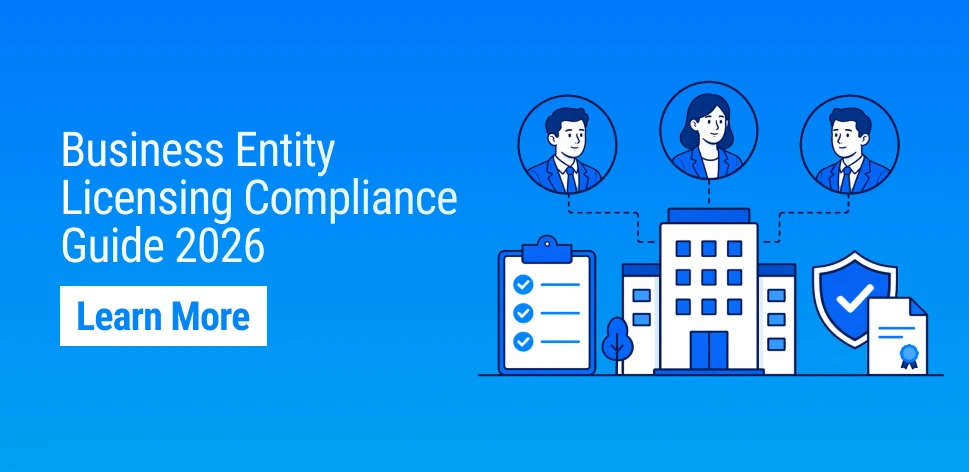
Why Role Classification Matters for Producer Management
If you don’t know the difference between agents, brokers, and producers, you won’t be the first. Many new insurance professionals find these terms confusing. In a nutshell, “producer” is a general insurance term that includes both agents and brokers—anyone who sells, solicits, or negotiates insurance policies. Where agents and brokers differ, however, is in who they represent. Agents represent carriers, while brokers represent the insured clients. While both agents and brokers will obtain a producer license in most states, there are a few differences in regulations and requirements that are important to know for insurance organizations and compliance leaders.
Why does role classification matter for producer management? Understanding the differences between agents and brokers improves producer management by streamlining recruiting, onboarding, and ongoing management in every phase of the producer lifecycle. Knowing whether and when licenses and appointments are needed helps agencies and other entities gather the correct producer data at the right stage. It helps insurance organizations maintain agent, broker, and producer compliance, keeping operations efficient and on schedule.
Regulatory Differences & Licensing Variations Across Agents, Brokers & Producers
In most states, such as Florida, both agents and brokers can operate under the same producer license. However, a few states stipulate slightly different categories and requirements for agents and brokers. New York and California serve as two examples to illustrate why it can be important for agencies and other organizations to correctly classify agents and brokers.
Agents vs. Brokers in New York
New York explicitly distinguishes between agents and brokers in Insurance Law 2101, defining agents as representatives of insurance companies and brokers as representatives of the insured, similar to most other states. Distinctly, though, New York has slightly different licensing requirements for agents and brokers based on those roles, defined separately in Laws 2103 and 2104. Let’s break it down:
| Requirement | Agents | Brokers |
| Appointment | Required by the insurer | Not required |
| Market Access | Limited to appointed carriers | Not limited to a single carrier |
| Legal Authority | Acts on behalf of insurer | Acts on behalf of the insured |
Consider this real-life example of how the differences in appointment requirements for agents and brokers in New York can affect compliance strategies. Both agents and brokers can apply for Life, Accident, and Health licensing in New York, and share many prelicensing requirements in common, such as completing 40 course hours, passing the licensing exam, and showing proof of having passed FINRA Series 6 or Series 7 if applying for variable life/annuities authority.
However, because New York agents must be appointed by an insurer before they can sell, solicit, or negotiate their product, they are required to submit a notice of appointment to the New York DOI within fifteen days from the date the agency contract is executed or the first insurance application is submitted as part of the licensing process, adding an extra qualification for agencies to manage. This distinction creates additional compliance challenges for managing appointment filings, termination tracking, and other related obligations.
Agents vs. Brokers in California
California law also distinguishes the difference between agents and brokers based on their roles. California Insurance Code Section 1621 stipulates that an agent is a person authorized to transact insurance on behalf of an insurance company, typically confirmed by appointment status. Brokers, however, operate on behalf of the insured rather than the insurer, which introduces additional regulatory requirements.
For example, when brokers charge fees, the law requires that the broker not only maintains a license, but must disclose a written agreement signed by the consumer confirming the basic services performed, fees being charged, qualification for insurer compensation, appointment status of the broker, and more. Additionally, under California Insurance Code 1665, property and casualty brokers must maintain a bond of $10,000 paid to the State of California in order to safeguard insurance transactions.
Resident vs. Non-Resident, Multi-State, and Other Complications
The role-based differences for agents and brokers mean that additional complications come into play when managing insurance producers spans multiple states. One state might have an all-encompassing producer license for both agents and brokers, but once the producer tries to obtain a non-resident license in a different state, it’s important to know whether or not the accompanying requirements change.
For example, both agents and brokers operate under a producer license in Florida, but when applying for a non-resident license in New York, where agents and brokers are licensed separately, a producer must determine which license classification aligns with their business activities and apply accordingly. In this case, the regulatory obligations, sponsorship requirements, and compliance expectations may differ depending on whether the individual is licensed as an agent or a broker.
Key Takeaways
- 1 – Although most offer the same producer license for both types, some states stipulate slightly different requirements for agents and brokers.
- 2 – New York and California show how the difference between agents and brokers can affect regulation details.
- 3 – The differing appointment requirements for agents and brokers can complicate multi-state producer management.
Appointment Management Differences by Role
How does appointment management differ between agents and brokers? In simple terms, agents are required to be appointed by the insurance companies they represent, while brokers—who represent the insured rather than the insurer—are not always subject to the same requirement.
According to the NAIC Producer Licensing Model Act (#218), producers must be appointed when acting on behalf of an insurer, not when representing the insured. This makes appointment requirements role-based rather than title-based.
As a result, brokers generally do not need to be appointed unless required by specific state regulations or when they are functioning in an agent capacity. Because requirements can vary, it is important to confirm appointment obligations with each state in which you are licensed to ensure your specific license type is properly aligned.
In some states, brokers might get looped in with agents under the producer classification and be required to complete appointment requirements for producers, even though they aren’t working on behalf of an insurance company. Additionally, some states, such as Massachusetts, may impose additional requirements depending on how authority is granted.
Essentially, depending on your state, producers classified as brokers could (or could not) require appointments, with further requirements varying from state to state. For example, a broker operating in Massachusetts would need to be appointed with the insurance company whose policies they want to negotiate; in Alaska, though, they would not require appointments.
This adds complexity to appointment requirements for brokers working across multiple states. Importantly, a broker will only be required to be appointed if they are acting as an agent or exercising authority that normally falls under an agent’s role, such as in the following situations:
- Dual Role: The broker is simultaneously acting as an agent.
- State-Specific Law: The broker is licensed in a state like Massachusetts, Pennsylvania, or New Jersey.
- Binding Authority: The broker is authorized to bind coverage on behalf of an insurer.
- Commission: In some states, the broker receives insurer payment of commissions based on appointment.
What does this mean for producer appointment management? Knowing the role-based difference between agents and brokers and their requirements for each state can facilitate easier, more accurate management of their compliance by eliminating appointment confusion.
Agent and Broker Compliance Risks That Can Derail Effective Producer Management
Each stage of the producer’s lifecycle comes with specific requirements that must be accurately monitored to prevent the onset of common compliance risks faced by insurance agencies, brokerages, MGAs, and other organizations. But when complex producer details get lost or misunderstood during manual processes, those risks can escalate. The following significant compliance mistakes can derail effective producer management, putting your organization at risk:
● Misclassification:
Insurance role classification compliance issues such as confusing agents with brokers or mistaking employees for independent contractors can lead to incorrect licensing assumptions, which invite greater regulatory scrutiny.
● Unauthorized Selling:
Allowing producers to sell, solicit, or negotiate insurance without the correct license, line authority, appointment status, or state approval can lead to fines, policy disputes, and damaged credibility.
● Missed Appointments:
Failing to appoint a producer before they begin selling in states that require carrier appointments is a serious matter that violates compliance, disrupts the commission process, and may even elicit enforcement action.
● Expired Licenses:
Without an efficient licensing tracking system, license renewals and continuing education requirements can go overlooked, leading to expired licenses and the potential for regulatory penalties.
● Continuing Education (CE) Noncompliance:
If the required continuing education credits are not completed, licenses may not be able to be renewed, interrupting selling activity.
● Incorrect Lines of Authority:
Producers are only eligible to sell products within their approved lines of authority, such as life, health, or property and casualty. If they sell outside of their LOA, regulatory violations can result.
● Non-Resident Licensing Gaps:
If producers operate across state lines, they must make sure to maintain the appropriate non-resident licenses to avoid unauthorized selling—however, because licensing requirements vary by state, small oversights can quickly snowball into compliance issues.
● Audit Trail Gaps:
Clear documentation of licensing, appointments, and compliance procedures is essential to prove adherence to regulations. Without it, investigations into operational compliance can have disastrous results.
Insurance agent, broker, and producer compliance setbacks come with high costs for businesses and must be taken seriously to avoid regulatory penalties, operational disruptions, and reputational damage. Recent research on the impact of compliance in the insurance industry found that:
- 76% of risk and compliance professionals believe an ethical compliance culture is essential for strategic decisions
- 87% of organizations experienced negative outcomes from having a reactive rather than proactive compliance strategy
- 36% of financial services firms have been fined at least once in the last year for not respecting compliance regulations
Source: REG Technologies
Preventing noncompliance is essential, but managing compliance risks to keep your operations running smoothly can quickly become overwhelming, especially if you’re facing operational bottlenecks that are preventing your business from implementing the most successful producer management strategies.
Key Takeaways
- 1 – Inefficient producer management strategies can threaten organizational compliance.
- 2 – Manual processes can lead to misclassification, unauthorized selling, missed appointments, and other compliance setbacks.
Operational Bottlenecks in Onboarding & Management
When onboarding agents versus brokers, the process is generally the same. However, unsuccessful onboarding can cause high turnover rates, worsen compliance issues, or result in significant fines that insurance organizations seek to avoid. When it comes to staying compliant while managing producers, onboarding is one of the first core areas where things start to go wrong.
Many organizations are still handling producer management manually, using spreadsheets and needlessly complex documentation processes to input data and bring agents and brokers onboard. These strategies create errors, inefficiency, and stress for producers and onboarding teams alike. They lead to data mismatches, multi-carrier coordination issues, and confusion between producer roles, ultimately delaying activation and opening up the risk of suspended selling authority.
Switching from manual to automated onboarding is the chance to cut down onboarding time from weeks to hours. Providing faster time-to-sell, lower costs, greater producer satisfaction, and real-time licensing checks, producer compliance automation empowers your organization to handle the challenges of a rapidly shifting, multi-state insurance landscape.
Manual vs Automated Role & Appointment Management
How does automation look in practice? To explore how automation can improve producer management, let’s take role and appointment management as an example, comparing the differences between manual and automated approaches.
| Feature | Manual | Automated |
| Classification Tracking | Producer roles and licenses are manually checked with spreadsheets or disparate systems, leading to a high risk of human error. | Producer classifications are tracked automatically across all states, and roles are updated in real time. |
| Appointment Visibility | It may be unclear which producers are appointed in each relevant state. | Dashboards provide instant visibility into all producer appointment statuses. |
| License Renewals | Missed license renewal deadlines can cause fines, lapses, or non-compliance. | Automated alerts immediately notify of upcoming renewals. |
| Audit Readiness |
Manual searches for audit-relevant documentation wastes time that could be spent on other tasks. |
Audit-ready reports are generated automatically, reducing prep time and errors. |
| Scalability | Operational growth is limited by the capacity of staff to handle onboarding tasks. | The system scales seamlessly, driving operational growth and enabling new producers to join without burden. |
Automation can significantly reduce onboarding time and lowers compliance exposure by minimizing human error and overlooked requirements. Additionally, with the potential to reduce workflow processing costs, AI-driven automation could save your business hundreds, if not thousands, of dollars. By implementing an automated solution to producer management, insurance organizations can improve performance, outcomes, and compliance.
Top 5 Best Practices for Agencies, Carriers & MGAs
When it comes to producer management, success lies in being proactive. Agencies, carriers, and MGAs that use automated processes for accurate classification, real-time tracking, and licensing verification reduce operational friction, minimize regulatory risk, and stay audit-ready.
Automation modernizes producer management and onboarding, transforming the way you manage the complex producer lifecycle.
Here are the top 5 best practices to elevate producer management, keep operations running smoothly, and stay compliant:
1. Centralized Role Classification Repository
Ensuring the correct classification of agents and brokers across all systems reduces misclassification and supports accurate license management and appointment tracking across carriers and states.
2. Automated Appointment Tracking
Leverage technology to automate appointment monitoring, empowering your business to stay compliant with state-specific requirements. Real-time alerts help reduce missed appointments so teams can focus on generating revenue.
3. License & Role Sync Across Systems
To ensure consistency and accuracy, licensing and role-based data should be synced across platforms. This helps avoid gaps in non-resident licenses and lines of authority, reducing the risk of unauthorized or interrupted selling.
4. Monthly Compliance Audits
Being proactive rather than reactive is essential for effective compliance management. By conducting audits on a monthly basis, your company can uncover gaps in adherence early, promoting operational continuity and quick issue resolution.
5. Integrated Onboarding Workflow
Proven onboarding practices such as a seamless, integrated workflow combines role classification, license verification, and appointment setup to improve producer satisfaction and decrease operational bottlenecks.
By staying current on changing regulations and implementing these best steps, insurance companies can keep abreast of compliance challenges and prevent disasters before they happen.
Expert Insight:
“As regulatory frameworks evolve in 2026, compliance teams in the insurance sector should remain vigilant and adaptive. These teams face a rapidly evolving regulatory landscape shaped by new frameworks for AI, data governance, capital risk management, capital adequacy, climate resilience, and consumer privacy” – Deloitte, 2026 Insurance Regulatory Outlook
FAQs About Agents, Brokers & Producers
Q.1 Are agents and brokers regulated differently?
Depending on the state, agents and brokers can fall under different regulatory restrictions regarding their different roles. Generally, agents represent insurers, while brokers represent insured clients.
Q.2 Do all producers need appointments?
No, not all producers need appointments. Appointment requirements vary by role and state. Usually, agents must be appointed by insurers, while brokers may not need appointments unless they are transacting on behalf of an insurer.
Q.3 How do agencies track role classification?
Centralized repositories or automated platforms can help agencies track producer roles, preventing misclassification and ensuring readiness for licensing checks and audits.
Q.4 What happens if a broker sells without the proper appointment?
Selling without proper appointment can lead to fines, disrupted commission, and contract disputes. However, unlike agents, brokers are not always required to be appointed.
Q.5 Can an agent act as a broker?
Yes, but the agent must obtain the appropriate license. Some producer licenses enable the producer to act as either agent or broker, but this varies by state. Ensuring appropriate compliance is essential to prevent unauthorized selling.
Q.6 How does multi-state licensing affect role management?
Multi-state licensing requires careful management of resident and non-resident licenses and the corresponding regulatory requirements. Issues with maintaining updated licenses can delay operations and cause compliance gaps.
Q.7 Can automation reduce misclassification risk?
Definitely! By tracking roles, licenses, and appointments in real time, automation reduces human error and improves efficiency.
Q.8 Are commissions impacted by incorrect classification?
Yes. Misclassified producers may be denied commissions or encounter delayed payments. Classification is important to ensure revenue flows smoothly.
Q.9 How often should agencies audit role compliance?
Audits should be conducted on a monthly basis to prevent errors, ensure license validity, and maintain appointment accuracy. Regular audits reduce operational disruptions and prepare agencies for regulatory inspections.
Q.10 What software helps manage agent and broker compliance?
Platforms like Agenzee centralize license tracking, appointment management, and multi-state visibility. They automate compliance monitoring to reduce manual work and operational bottlenecks, keeping your organization audit-ready.
How Businesses Simplify Agent, Broker & Producer Compliance at Scale
Systems equipped with centralized compliance dashboards, real-time alerts, and multi-state visibility empower insurance organizations to scale compliance across states and producer roles. By enabling automated appointment workflows and preparing teams with audit-ready, insightful reporting, scalable producer management systems reduce the risk of misclassification, missed appointments, and lapsed renewals.
While real-time alerts keep teams in the know regarding license renewals, expiring appointments, or changes in lines of authority, automated appointment workflows help streamline the process of connecting producers with carriers. Additionally, multi-state visibility allows compliance teams to thoroughly monitor non-resident licensing, preventing unauthorized selling. By making the transformative change from manual operations to automated solutions, operations can proceed uninterrupted.
About Agenzee:
Agenzee is a license and carrier appointment management platform designed for agencies, carriers, and MGAs. It centralizes licensing and appointment workflows, provides multi-state visibility, and automates compliance tracking to prevent lapses and reduce onboarding delays. By integrating these processes into one platform, Agenzee empowers teams to scale operations efficiently, stay compliant, and accelerate producer readiness.
Summary
As new AI requirements emerge in areas like AI oversight, insurance organizations face increasing challenges managing insurance agent, broker, and producer compliance. While the common industry term “producer” generally includes both agents and brokers, they perform different roles, and their regulation can differ depending on the state.
Accurate role classification affects licensing, appointment requirements, and overall operational success, helping agencies, brokerages, carriers, and MGAs stay compliant and efficient. When it comes to resident, non-resident, and multi-state licenses, the different roles of agents and brokers can complexify producer management. For example, whether or not a producer is representing an insurer is key to knowing if they need to obtain an appointment in whatever state they want to sell insurance.
Ultimately, to keep producer management on track, organizations can leverage automated solutions to avoid dangerous compliance setbacks like misclassification, unauthorized selling, missed appointments, and expired licenses. Because taking a proactive approach to compliance is crucial to avoid penalties, a comprehensive solution like Agenzee can mean the difference between operational bottlenecks and smooth producer management.
Allison is a Content Writer at Agenzee, creating blogs, case studies, social media content, and other value-driven materials to support overall marketing strategies and spur brand growth. Her storytelling expertise infuses her work with a clear, captivating voice that successfully drives conversion and engagement.
Educated in anthropology at Princeton University, Allison’s unique background in software solutions, fiction writing, ethnographic research, and tutoring gives her a unique perspective on the insurance licensing world, enabling her to pursue her mission: Making Agenzee the leader of insurance modernization.
Disclaimer: This post is for informational purposes only and does not constitute legal or compliance advice. Agenzee does not warrant the accuracy of and assumes no liability for reliance. Please consult regulators or professional advisors as needed. See our full disclaimer for details.
Subscribe
Stay Ahead with Agenzee Insights
Join our community to stay up-to-date on the latest news and strategies for license and appointment management
INDUSTRY INSIGHTS FOR INSURANCE AGENCIES, CARRIERS, AND MGAS
Similar Blogs
Read our blog to discover the latest industry insights and trends in license and appointment management.

let's catch up!
Schedule a Live 1-On-1
Demo of Agenzee!
Our insurtech experts would be thrilled to give you a personalized demo of how Agenzee can transform your compliance management processes.
Customers Opinions on Our Services and Products
What Our Customers Say
Find out why our customers are happy they chose Agenzee.