

Published On: June 15, 2026
Updated On: June 19, 2026
Insurance Appointment Delays: How License Tracking Software Prevents Revenue Loss

An insurance carrier appointment delay occurs when there is a gap between a producer’s anticipated readiness to sell and the completion of all required appointment requirements. Delays may occur before appointment submission, during state review, or after filing.
Insurance appointment delays can lead to slower producer onboarding, delayed premium generation, reduced sales productivity, and increased compliance exposure.
Many organizations rely on multiple systems, spreadsheets, emails, and carrier portals, creating challenges when attempting to establish a single source of truth. As a result, they may not get to the root of the problem before it evolves into a compliance issue.
To minimize risk, insurance organizations use insurance license tracking software to manage licenses, appointments, renewals, and compliance activity on one platform.
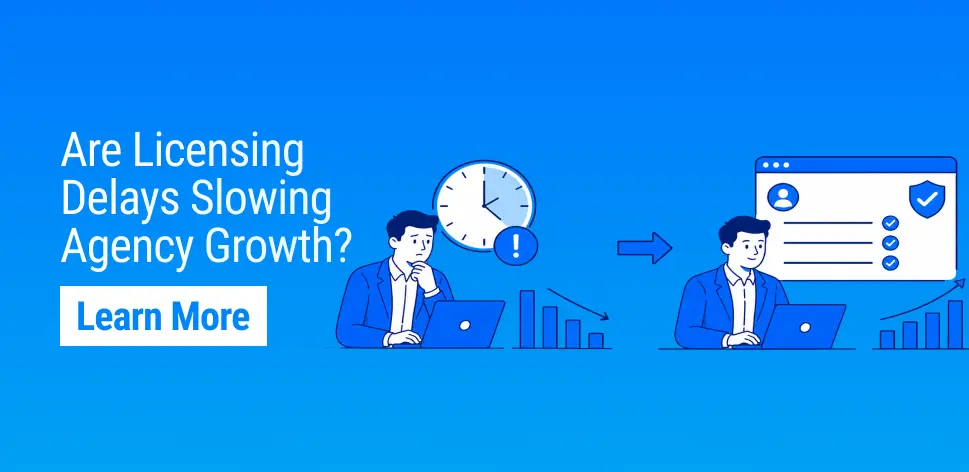
The Problem: Producer Appointment Delays Carry Risks
The most serious risk is regulatory action if a producer writes business before the required license and appointment status are confirmed. Other risks include fines, onboarding delays, and lost revenue.
Even when the producer is licensed, the carrier appointment requirement may still apply depending on the carrier, state, or line of authority. If the internal system says “ready” before the appointment status is confirmed, compliance teams may have to investigate, correct, document, and explain the issue to regulators.
Definition: Carrier Appointment Process
The carrier appointment process is the workflow used to authorize a producer or agency to represent an insurance carrier. Depending on the state and carrier, the process may include license validation, appointment filing, fee payment, regulatory review, and appointment confirmation.
The Cause: Why Appointment Delays Happen
Until required appointments are complete, a producer is unable to begin selling for a specific carrier, state, or line of authority.
A producer may have an active license but be unable to sell for a carrier if an appointment is required and has not been approved. The risk increases with reliance on spreadsheets, email chains, carrier portals, manual reminders, or outdated licensing records.
Appointment delays usually happen because of:
- Administrative Backlogs – Incomplete applications or documentation
- Background Checks – Can take 2 weeks to 3 months depending on the state
- State DOI Processing – Can take days to weeks depending on the state
- Just-In-Time (JIT) Appointments – States have different appointment timing rules
- Seasonal Slowdowns – December and January tend to be the busiest months
Some states require appointments, while others do not. Furthermore, states that require appointments have different rules about when they must be filed. These details can create confusion about deadlines, especially when managing a team of producers across multiple states.
Administrative Backlogs and Incomplete Applications
Administrative backlogs can begin before an appointment is submitted. Delays become more difficult to manage when appointment requests come through email, shared folders, or informal sales requests instead of a centralized appointment workflow.
Common administrative backlogs include:
- Missing producer license information
- Incorrect NPN
- Incorrect resident or nonresident license status
- Line of authority mismatch
- Incomplete appointment request forms
- Missing agency contract documents
- Manual review queues
- Missing E&O documentation
- Duplicate submissions
- Carrier-specific documentation requirements
Regulatory requirements are not static. Organizations that rely on outdated internal records may overlook changes to appointment fees, renewal schedules, and filing requirements.
For example, Nebraska modified its retaliatory appointment fees in 2026, while West Virginia updated its appointment renewal and termination deadlines.
Maintaining current regulatory information is essential to avoiding compliance gaps, unexpected expenses, and operational delays.
Background Checks and Eligibility Reviews
Fingerprinting requirements vary by state. Some states require fingerprints before an application is submitted, while others require fingerprints after submission. Noting which steps to complete in the right order for each state and vendor is part of the challenge.
Background review can also take longer if documentation is missing. For example, when the state DOI needs to contact outside agencies for records or evidence, appointment approvals can experience delays.
State DOI Processing Time
Appointment timing is not uniform across states. Some jurisdictions have tight appointment windows tied to license approval, while others allow longer filing periods or base the effective date on the transaction processing date. This variation makes manual appointment tracking risky because the delay can have different compliance consequences depending on the state.
Processing appointments times vary significantly by state and workload and may range from near real-time processing to several weeks in certain circumstances.
In addition, if an application requires further background screening, processing slows even further. Therefore, insurance professionals need to take each state processing time into consideration.
Definition: State Department of Insurance (DOI) A state Department of Insurance, often called a DOI, is the state regulatory agency responsible for overseeing insurance activity within that state. The DOI is the authority that sets and administers many state-specific insurance compliance requirements.
Just-in-Time Appointments
A just-in-time appointment is an appointment workflow where the carrier files the producer’s appointment after a defined business trigger, such as the first contract execution or application submission, instead of appointing every producer in advance. JIT can reduce unnecessary appointment costs, but only when filing deadlines are tracked carefully.
The operational risk is the deadline tied to the state-defined appointment trigger. Not all states allow JIT appointments. Some states require pre-appointment, and other states don’t require appointments at all.
JIT can reduce unnecessary appointment fees, but it can also create compliance risks. If appointment deadlines are missed, organizations may face compliance concerns, corrective actions, or other regulatory consequences depending on state requirements.
Definition: Just-in-Time Appointment A just-in-time appointment is an appointment workflow in some states where the carrier files the producer appointment after a defined business trigger, such as contract execution or first application submission, instead of appointing every producer in advance.
Seasonal Slowdowns in December and January
December and January can create additional friction because appointment renewals, terminations, holidays, year-end staffing constraints, and new-year producer activity overlap.
Several renewal periods begin in December, January, or early in the year. Failing to pay the renewal invoice by the deadline results in appointment termination and requires payment of the initial appointment fees.
In some states, appointment renewals are required, while in others they are not, which can create another blind spot in appointment workflows. Appointment deadlines affect visibility, renewal billing, producer readiness, and workload planning.
Common Causes of Appointment Delays
| Appointment Delay Cause | What Can Happen | Risk |
| Incomplete Producer Profile | Missing NPN, license data, E&O, contract documents, or state-specific forms | Producer cannot be cleared to sell |
| License or LOA Mismatch | Producer has a license, but not the correct line of authority or state | Producer cannot write business for the missing LOAs or in unlicensed states |
| State DOI Review | Filing waits in state review or requires additional documentation | Compliance team cannot confirm ready-to-sell status |
| Background Check | Fingerprinting or investigative review is incomplete | License issuance or eligibility confirmation slows down. Onboarding timeline extends |
| JIT Deadline Missed | Appointment deadline tied to first business or contract is not tracked | Compliance exposure increases. Business may be held, corrected, or delayed |
| Renewal Season Congestion | Terminations, renewals, invoices, and year-end activity overlap | Active appointments may lapse |
Appointment processing becomes difficult when the workflow is fragmented across multiple systems. However, a centralized workflow reduces the number of manual status checks required after submission.
For example, one team may track licenses in a spreadsheet, while another tracks producer readiness in a CRM. Compliance may store evidence in shared folders, and leadership may only see the issue after the producer appointment has lapsed.
The Solution: Proactive Insurance Appointment Workflows
Avoid assuming the same appointment process applies everywhere. Follow this workflow:
- Confirm State Requirements – Are appointments required, are JIT appointments allowed, and do renewal or termination dates affect filing? (Individual, agency, and DRLP appointment handling requirements may differ.)
- Prepare and Double Check Documentation – Remember E&O documentation, background check and fingerprint documents, etc.
- Track NIPR Appointment Status – Track and document the appointment filing status, effective date, submission method, and the date the request was initiated.
- Create Exception Queues – Include missing documentation, rejected filings, producers with license but no appointment, producers with appointment but expired license, upcoming renewals, producers waiting on background review
An effective appointment system creates visibility into licensing data from appointment activity and onboarding workflows to renewal deadlines and operational reporting.
Appointment Tracking from Request to Approval
Insurance appointment tracking should first identify when appointments are needed and validate producer licenses. Next, organizations should verify documentation, monitor filing status through NIPR or state systems, and address any deficiencies before they become delays. Then, confirm appointments and resolve exceptions or rejections. Finally, store audit documentation, track renewals, and monitor appointment terminations.
Appointment delays often happen because no one has a complete view of producer readiness. The goal is to have fewer delays between request and approval by improving visibility. Assigning ownership for each task ensures someone is responsible for each step.
How License Tracking Software Reduces Appointment Delays
Insurance license tracking software is a system to centralize producer license, appointment, renewal, continuing education, regulatory action, and compliance task data across states and carriers. The software replaces fragmented spreadsheets with centralized records, automated alerts, workflow visibility, and audit-ready documentation.
Managing multiple insurance appointments efficiently is more complex when producers work across multiple carriers and states. A single producer may have several licenses, carrier relationships, and appointment requirements.
To address these challenges, many organizations implement centralized license and appointment management systems that provide greater visibility into producer readiness and compliance activity.
Agenzee supports licensing workflows through centralized license and appointment tracking, automated alerts, dashboard visibility, and audit-ready workflows for growing insurance organizations.
For teams managing producer onboarding and multi-state appointment activity, license and appointment management software for agencies can help reduce delays before they become revenue loss.
Definition: Appointment Management System An appointment management system is software or a structured workflow to monitor, renew, terminate, and document carrier appointments. In insurance, the software helps carriers, MGAs, and agencies track producer authorization to sell for specific carriers, states, products, and lines of authority.
Manual Appointment Tracking vs. License Tracking Software
| Workflow Area | Manual Tracking | Software-Supported Tracking |
| License verification | Staff check state websites, NIPR, spreadsheets, or email history | License status is centralized and updated through connected data sources |
| Appointment requests | Requests arrive by email, spreadsheet, or portal | Requests move through a structured workflow |
| NPN validation | Manual lookup or copied data | NPN used as a core identifier |
| State rule tracking | Staff relies on notes or memory | Requirements and deadlines can be tied to workflows |
| Status visibility | Sales and compliance ask for updates manually | Dashboards show pending, approved, rejected, and expiring items |
| JIT tracking | Trigger dates may be missed | Trigger events can be monitored and escalated |
| Documentation | Evidence is stored across folders and inboxes | Records are attached to producer and appointment history |
| Audit readiness | Staff reconstructs the timeline later | System history preserves the timeline as work happens |
FAQ: Insurance Appointment Delays
Q.1 What causes insurance license appointment delays?
Insurance license appointment delays can be the result of incomplete producer documentation, license or line of authority mismatches, background check delays, state DOI processing time, missed JIT triggers, renewal season workload, or manual tracking gaps.
Q.2 How do appointment delays affect insurance revenue?
Appointment delays can affect revenue when producers are unable to begin writing business due to incomplete appointment requirements. The result can be delayed premiums, missed sales opportunities, reassigned business, commission issues, and lower producer productivity.
Q.3 What is insurance appointment tracking?
Insurance appointment tracking is the process of monitoring appointment requests, submissions, approvals, rejections, renewals, terminations, and effective dates across producers, carriers, states, and lines of authority.
Q.4 How does insurance license tracking software prevent appointment delays?
Insurance license tracking software helps prevent delays by centralizing producer license status, appointment data, renewal deadlines, CE information, alerts, documentation, and audit history. As a result, compliance and operations teams gain visibility into issues that could block producer readiness.
Q.5 What is the difference between a producer license and a carrier appointment?
A producer license gives an individual or business entity authority to solicit insurance in a state. A carrier appointment authorizes that producer to represent a specific insurer, when required by state law or carrier process.
Q.6 Why are just-in-time appointments risky without tracking?
Just-in-time appointments can reduce unnecessary appointment fees, but they depend on accurate tracking. If the producer submits business or signs a contract and the appointment filing deadline is missed, the organization may face compliance exposure and revenue delays.
Q.7 What should agencies track to manage multiple carrier appointments?
Agencies should track producer license status, NPN, resident and non-resident licenses, lines of authority, carriers, appointment status, effective dates, renewal dates, termination deadlines, rejected filings, documentation, and audit history.
Alexandra is a copywriter and researcher who specializes in evergreen content production. She has authored hundreds of SEO-driven blogs, helping clients translate complex insurance coverage topics into clear, authoritative content.
Alexandra graduated from the University of Oregon with a BA in German: Language, Literature, and History, and a BA in Digital Art. She spent 20 years living abroad in Germany and Spain before returning to the US in 2025.
Disclaimer: This post is for informational purposes only and does not constitute legal or compliance advice. Agenzee does not warrant the accuracy of and assumes no liability for reliance. Please consult regulators or professional advisors as needed. See our full disclaimer for details.
Subscribe
Stay Ahead with Agenzee Insights
Join our community to stay up-to-date on the latest news and strategies for license and appointment management
INDUSTRY INSIGHTS FOR INSURANCE AGENCIES, CARRIERS, AND MGAS
Similar Blogs
Read our blog to discover the latest industry insights and trends in license and appointment management.


let's catch up!
Schedule a Live 1-On-1
Demo of Agenzee!
Our insurtech experts would be thrilled to give you a personalized demo of how Agenzee can transform your compliance management processes.
Customers Opinions on Our Services and Products
What Our Customers Say
Find out why our customers are happy they chose Agenzee.