

Published On: June 29, 2026
Updated On: July 10, 2026
Insurance Regulatory Actions in 2026: What Non-Compliance Cost Organizations

Insurance regulatory actions provide valuable insight into what regulators are watching, which compliance failures may trigger enforcement, and how operational gaps quickly become regulatory matters.
Administrative fines vary widely by jurisdiction, type of violation, and enforcement history. In some state insurance contexts, civil penalties may range from $50 to $10,000 per violation, while recent public enforcement actions show penalties reaching hundreds of thousands of dollars. In 2014, New York DFS announced a $50 million fine against a carrier and their subsidiaries.
The consequences can extend beyond fines. Organizations may also face cease-and-desist orders, license suspension, revocation, restitution, corrective-action reporting, increased regulatory scrutiny, and reputational harm. Recent public actions from New Jersey, Oregon, and Texas show recurring themes, including licensing gaps, unapproved activity, weak reporting, missing documentation, and poor oversight.
As regulatory requirement evolve, compliance complexities increase. Carriers that want to proactively avoid regulatory actions need risk-monitoring to be part of their normal insurance carrier operations.
Definition: Department of Financial Services (DFS)
The DFS is a state regulatory agency that responsible for overseeing and monitoring financial institutions such as insurance companies.
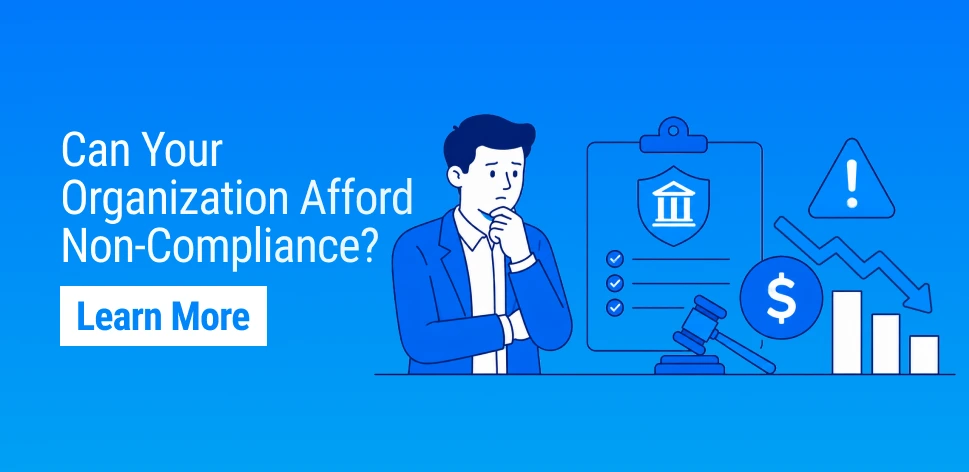
What Regulatory Actions Mean for Insurance Organizations
A regulatory action is a formal step taken by a regulator in response to alleged or proven noncompliance. In public insurance records, regulatory actions may include consent orders, cease-and-desist orders, license suspensions, revocations, restitutions, administrative fines, application denials, or corrective-action requirements.
In addition to fines, penalties, and violations, the larger issue is often the business impact. A fine may be a one-time penalty, but a cease-and-desist order can restrict or stop business activity. A corrective-action requirement may require an organization to demonstrate that broken processes were corrected. For these reasons, regulatory action can be worse than a fine alone.
Common Regulatory Actions and Their Severity
| Regulatory Action | What it usually means | Severity (1–10) |
| License Suspension or Revocation | Loss of authority to operate, sell, or transact business. | 10 |
| Cease-and-Desist Order | Immediate halt to business usually due to an active compliance problem. | 9 |
| Restitution or Repayment Order | Money must be repaid or losses must be made whole with financial and operational consequences. | 8 |
| Civil Money Penalties and Administrative Fines | A monetary sanction, sometimes with other requirements. Severity rises with the amount and the attached conditions. | 7 |
| Consent Order | These orders often combine findings, penalties, and remediation obligations. | 6 |
| Corrective-Action Requirement | Proof that the company changed the process or fixed the deficiency must be shown. | 4 |
When Regulatory Action Is Worse Than Just a Fine
Regulatory action rarely stops at a dollar amount. In many cases, the financial penalty is only a portion of the enforcement outcome.
For example, New Jersey’s 2026 enforcement summaries include matters where license revocation, restitution, surcharges, and fines appear in the same case.
Oregon’s 2025 records show a similar range of consequences, including cease-and-desist orders, fines, restitution, suspension, and revocation.
Texas disciplinary orders also show that monetary penalties may be paired with corrective-action reporting or cease-and-desist relief.
These examples reinforce an important point: regulatory actions are not just about fines. They can affect an organization’s authority to operate, require repayment to affected parties, impose ongoing reporting obligations, and create long-term compliance and reputational consequences.
Where Insurance Organizations Find Regulatory Actions
NAIC can help as a starting point, especially when organizations need a centralized index of certain state enforcement topics. However, the NAIC state enforcement activities page is compiled from state department websites and should not be treated as a complete or authoritative enforcement database.
The most reliable source is the state regulator’s enforcement page, order archive, or disciplinary database, or published administrative actions. Some states publish searchable summaries, while others publish downloadable PDFs, bulletins, consent orders, and reports.
Below are a few examples of state regulatory action databases.
Examples of State Regulatory Action Sources
| State | Official public source | Format |
| Alabama | Alabama DOI Enforcement Action Search | Online search service |
| Louisiana | Louisiana DOI Regulatory Actions | Alphabetical database |
| Maryland | Maryland Producer Enforcement Summaries | Summary of enforcement actions by year |
| New Jersey | New Jersey Insurance Enforcement Activity | Year-by-year enforcement summary archive |
| Oregon | Oregon DFR Notices and Orders | Searchable orders database |
| Texas | Texas Disciplinary Orders | Disciplinary orders database |
New Jersey is a strong example of a summary-based model. Its enforcement page lists respondents, short descriptions of the conduct, and the sanction. Oregon publishes enforcement summary PDFs and maintains a searchable orders database. Texas publishes detailed disciplinary orders and commissioner actions that show the legal basis and final disposition.
NIPR Reports and Alerts tools can also support monitoring by providing centralized access to demographic, licensing, appointment, and regulatory-action information, including RIRS-related data. This resource is helpful for workflow visibility and monitoring, but teams still need the underlying state record when they are interpreting a specific action.
Definition: Regulatory Information Retrieval System (RIRS)
An NAIC system that contains records of regulatory actions taken by participating jurisdictions against insurance producers, companies, agencies, and other entities engaged in the business of insurance.
The Most Common Regulatory Actions Published by Regulators
Regulators use different types of actions, depending on the severity and nature of the underlying issue. Some actions are designed to stop conduct immediately. Whereas others impose monetary penalties, remove authority, require restitution, or force the company to prove that a broken process was fixed.
Consent Orders
Consent orders are common because they allow regulators to formalize findings, remedies without taking every matter through a contested hearing. These orders often combine facts, legal conclusions, penalties, and operational commitments in a single document.
Texas used this format in its January 2026 order that required cease-and-desist relief for certain conduct and imposed a $130,000 administrative penalty.
Definition: Consent Order
A formal written agreement between a regulator and a licensed party that resolves an enforcement matter without going through a fully contested hearing. In insurance, a consent order typically outlines the regulator’s findings, the violations involved, and the actions, which may include fines, restitution, corrective measures, or reporting obligations.
Cease-and-Desist Orders
Cease-and-desist orders are designed to stop improper or unauthorized business activity. Unlike a fine, which imposes a financial penalty, a cease-and-desist order can immediately restrict or halt certain conduct.
For example, Washington ordered two entities to cease and desist from selling pet insurance in the state and imposed a $30,000 fine. Oregon’s 2025 enforcement summary also shows cease-and-desist relief being used in matters with licensing, reporting failures, and unauthorized activity.
Definition: Cease-and-Desist Order A formal order directing a person or entity to stop a specific activity immediately. In insurance, a cease-and-desist order is typically used when ongoing conduct violates applicable laws or rules, or creates potential consumer risk.
License Suspension or Revocation
Suspension and revocation are among the most serious public enforcement outcomes because they remove or restrict the authority to conduct insurance business. Unlike a monetary penalty, these actions directly affect whether a producer, agency, company, or other licensed party may continue operating.
New Jersey’s 2026 summaries include multiple revocations tied to fraud, misappropriation, unlicensed insurance business, and failure to report actions taken in other states.
Definition: Insurance License Revocation A formal action that permanently removes a person or entity’s authority to hold or operate under an insurance license.
Restitution and Repayment Orders
Restitution may also be included as part of a broader regulatory action. In these cases, the enforcement outcome may extend beyond a fine or license action and may also require repayment to affected consumers or other impacted parties.
New Jersey’s 2026 page includes matters where restitution was ordered alongside revocation, fines, and costs. Similarly, Oregon’s 2025 summary includes a case in which restitution was ordered in addition to a cease-and-desist order, a fine, and license revocation.
Definition: Restitution A regulatory action requiring a person or company to restore financial losses caused by a violation. In insurance, restitution is typically used when regulators determine that policyholders, consumers, insurers, or other parties are financially harmed as a result of the underlying conduct.
Civil Money Penalties and Administrative Fines
Civil and administrative fines can range from relatively minor to six-figure enforcement actions, depending on the violation. In May 2025, Washington’s Office of the Insurance Commissioner announced $510,500 in fines in the first four months of the year, including a $250,000 fine against an unlicensed insurer. In Texas, The Commissioner ordered an insurer to pay a $225,000 administrative penalty following a triennial quality-of-care examination and required the insurer to report on implementation of its post-exam corrective action plan.
What Recent 2025 to 2026 Public Enforcement Actions Show
Recent public enforcement actions show that core compliance failures remain common across multiple jurisdictions. Issues such as unlicensed activity, authority mismatches, misrepresentation, mishandling of funds, reporting failures, and weak documentation continue to appear in regulatory orders. The details differ from case to case, but the control issues behind them are often similar.
Many businesses are unaware of compliance issues until they become a problem. The cases below illustrate how one underlying breakdown can trigger multiple enforcement outcomes.
New Jersey Enforcement Summaries
New Jersey’s 2026 enforcement summaries make one point clear. Regulators do not isolate one problem when the record supports several. In January 2026, the department posted actions involving unlicensed insurance business, fraudulent documents, misappropriation, failure to report other state actions, and insurance fraud. Sanctions included license revocation, fines, fraud surcharges, and restitution.
Oregon Cease-and-Desist, Revocation, and Civil-Penalty Orders
Oregon’s Summer-Fall 2025 enforcement summary shows how often penalties are stacked. The summary includes cease-and-desist orders involving to false claims, misuse of client premium money, unpaid licensing fees, authority mismatches, and annual report failures. In several matters, those orders were paired with fines, revocations, restitution, or suspension.
What Regulatory Actions Reveal About Insurance Operations
Regulatory actions often reveal more than a single compliance violation. For organizations , they can expose weaknesses in licensing controls, appointment oversight, producer supervision, documentation practices, reporting procedures, and internal accountability. These actions are a reminder that compliance is an operational function that requires visibility, accurate records, consistent workflows, and timely escalation.
Licensing and Appointment Gaps
Many regulatory actions point back to licensing and appointment gaps. Producers must hold the proper license and authority in each state where they conduct business, and carriers must ensure appointments are filed according to applicable state requirements.
Problems can arise when a producer is active in a state without the correct license, holds a line of authority that does not match the home-state record, or begins acting on behalf of an insurer before the appointment is properly filed. For insurance organizations, appointment management and license verification should be treated as compliance controls, not administrative afterthoughts.
Misrepresentation and Filing Issues
Regulatory actions can also stem from issues with filings, omissions, or misrepresentations. Fraudulent documents, false information, and undisclosed prior actions are common source of violations.
A filing problem usually points to a deeper review failure, such as weak disclosure checks, poor escalation of adverse history, or no clear ownership over required filings. Organizations should treat submissions to regulators as high-risk compliance events that require accuracy, accountability, and documented review.
Documentation and Audit-Trail Weakness
Some regulatory actions show that regulators are looking into the insurer’s ability to document its compliance processes. Without documentation to show when a review occurred, who approved it, what evidence was used, and how an exception was resolved, the compliance problem becomes larger than the original event.
Weak documentation can worsen an enforcement outcome because it makes the underlying conduct harder to explain, defend and remediate. Organizations need reliable license management systems in place that support audit documentation, remediation, and follow-through.
Oversight Failures Across Distributed Teams
Regulatory actions often expose weak coordination across teams. Common examples include producers acting without proper authority, missed reporting obligations, improper producer terminations, or undocumented licensing change.
These issues are rarely isolated. They typically indicate that key information is not moving consistently between licensing, appointments, operations, reporting, and management.
For organizations, the solution is to create a reliable producer compliance management system that creates visibility, consistency, and accountability across the organization.
How Organizations Build a Regulatory Action Monitoring Process
A practical regulatory action monitoring process usually follows three core steps: collect the right sources. review new actions on a set schedule, and classify the action by risk type and severity.
Once the action is identified, the firm should assign follow-up to the appropriate team and document the steps taken. Effective insurance compliance solutions have built-in monitoring and reporting processes that support regulatory review.
Build a Source List
Start by building a source list based on where your organizationdoes business. This should include every state where the company holds licenses, writes business, appoints producers, or terminates appointments.
Next, create one source inventory for each state. At minimum, record the regulator name, the enforcement or disciplinary page, the order archive if separate, and the format used by that state. Your compliance team should know where to look before a review cycle begins.
After that the state-level inventory is complete, add supporting national tools. The NAIC can help serve as a cross-state reference point, while NIPR can provide an additional monitoring layer for licensing, appointments, and regulatory action data.. These tools help your team scan efficiently, but they should not replace the state regulator’s official record when an action needs to be reviewed closely.
Create a Monthly Review Workflow
Set one review date each month and treat it like any other compliance control. During each review, pull new regulatory actions from state sources. At a minimum, capture the link, title, date, jurisdiction, and respondent and source location.
Next, classify each action. Start by tagging the action type, such as consent order, cease-and-desist order, revocation, restitution, fine, denial, or corrective-action requirement.
Then tag the underlying issue. Common categories may include unlicensed activity, appointment failure, authority mismatch, misrepresentation, reporting failure, mishandled funds, or documentation weakness.
Once the action has been reviewed and tagged, ask yourself: does this reflect a weakness that could also exist in your operation?
Set Escalation Rules by Action Type
To keep compliance issues organized and actionable, not every finding should trigger an immediate escalation. The team should escalate matters based on severity, operational impact, repeat occurrence, and regulatory risk.
Immediate escalation is required when an issue requires urgent corrective action, creates a material compliance or licensing risk, impacts the ability to sell, service, appoint, renew, or operate, involves a regulator inquiry or complaint, affects multiple producers or business units, or reflects a repeated issue that may indicate a process breakdown.
Low-severity fines with limited operational impact can usually stay in the monitoring log unless they point to a repeated issue.
Medium-severity consent orders or application denials should usually trigger a targeted internal check to confirm sound filing, disclosure, or approval controls.
High-severity cease-and-desist orders, revocations, restitution orders, or corrective-action mandates should usually trigger immediate review.
The final step in the escalation process is documentation. Each escalated item should be recorded in a clear and consistent manner so that the team can demonstrate how the issue was identified, reviewed, and resolved.
At a minimum, the documentation should include:
- The date the issue was identified and escalated
- The person or team responsible for the review
- The risk or concern that triggered escalation
- The internal check or validation that was performed
- The outcome of the review
- Any remediation, corrective action, or follow-up required
- The date the item was closed or moved back to monitoring
Having an audit trail makes the monitoring process defensible. It shows that issues were not only tracked, but also reviewed, evaluated, and addressed based on the level of risk involved.
Definition: Escalation Rules Predefined guidelines that determine when an issue must be raised to a higher level of review or authority. In insurance compliance, escalation rules help teams decide which problems stay in routine monitoring and which ones require immediate action by compliance, operations, legal, or leadership teams.
Turning Public Enforcement into Stronger Compliance Controls
Insurance regulatory actions provide valuable insight into where regulators have identified control failures, what consequences followed, and which compliance issues continue to create exposure across the industry.
Fororganizations, monitoring regulatory action can help strengthen internal workflows before the same issues surface in their organization. Monitoring workflows improve licensing oversight, appointment management, reporting discipline, and audit readiness.
Ready to bring regulatory monitoring workflows into one centralized process? Book a demo of Agenzee to see how connected compliance management can reduce risk and improve control.
Insurance Regulatory Action FAQ
Q.1 What is the difference between an enforcement action and a penalty?
An enforcement action encompasses the full regulatory response. A penalty is only one part of that response. A single enforcement action may include revocation, restitution, reporting obligations, or cease-and-desist relief.
Q.2 Can a regulatory action include restitution or revocation?
Yes. A regulatory action may include revocation, fines, restitution, and other sanctions.
Q.3 How often should you monitor enforcement activity?
Monthly monitoring is advisable for most compliance teams, with prompt review when a matter affects your own jurisdictions, lines of business, or producer network.
Alexandra is a copywriter and researcher who specializes in evergreen content production. She has authored hundreds of SEO-driven blogs, helping clients translate complex insurance coverage topics into clear, authoritative content.
Alexandra graduated from the University of Oregon with a BA in German: Language, Literature, and History, and a BA in Digital Art. She spent 20 years living abroad in Germany and Spain before returning to the US in 2025.
Disclaimer: This post is for informational purposes only and does not constitute legal or compliance advice. Agenzee does not warrant the accuracy of and assumes no liability for reliance. Please consult regulators or professional advisors as needed. See our full disclaimer for details.
Subscribe
Stay Ahead with Agenzee Insights
Join our community to stay up-to-date on the latest news and strategies for license and appointment management
INDUSTRY INSIGHTS FOR INSURANCE AGENCIES, CARRIERS, AND MGAS
Similar Blogs
Read our blog to discover the latest industry insights and trends in license and appointment management.

let's catch up!
Schedule a Live 1-On-1
Demo of Agenzee!
Our insurtech experts would be thrilled to give you a personalized demo of how Agenzee can transform your compliance management processes.
Customers Opinions on Our Services and Products
What Our Customers Say
Find out why our customers are happy they chose Agenzee.