

Published On: April 16, 2026
Updated On: April 23, 2026
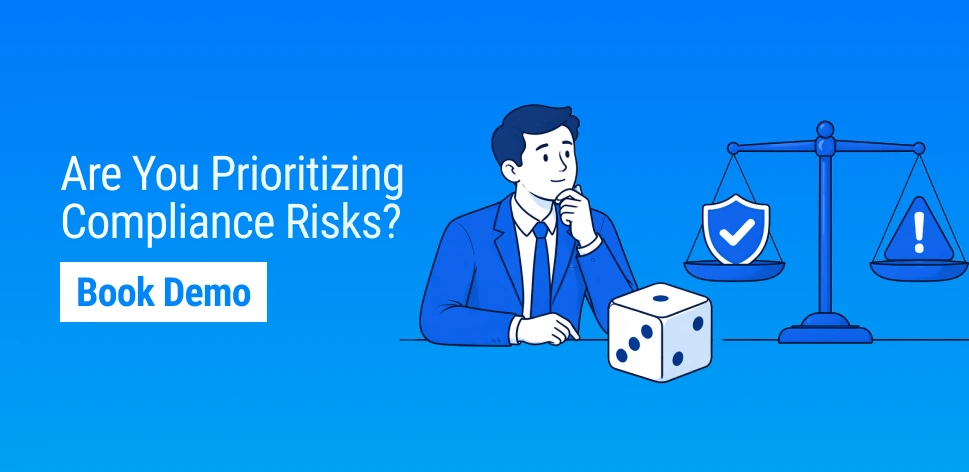
Are You Considering the Odds in Your Compliance Strategy?

In compliance management, it’s easy to fall into the habit of treating every requirement as equally important. Every license, every appointment, every renewal deadline, it all feels critical, and in many ways, it is. But when everything is treated with the same level of urgency, it becomes difficult to focus on what impacts your business the most.
The reality is that not all compliance risks carry the same weight. Some are more likely to occur, while others, although less frequent, can have a much greater impact when they do. Understanding that difference is what allows organizations to move from simply managing compliance to managing it strategically.
Not All Risks Deserve Equal Attention
When you take a step back and look at compliance through a broader lens, patterns start to emerge. Certain issues happen regularly and require consistent attention. License expirations, for example, are predictable. They follow set timelines and, if not monitored closely, can quickly interrupt a producer’s ability to conduct business.
Appointment issues are another common challenge. Whether it’s delays, missing filings, or unclear status, these are the types of issues that tend to surface often, especially during onboarding or periods of growth.
Then there are risks that occur less frequently but carry significant consequences, such as regulatory actions. While these may not be part of daily operations, their impact can be substantial when they do arise.
Recognizing the difference between what is frequent and what is severe is key. Without that awareness, it’s easy to spend equal time across all areas, even when the actual risk level is not equal.
When Everything Is Important, Nothing Truly Is
One of the most common challenges teams face is spreading themselves too thin. There’s an instinct to try to stay on top of everything at once, but in doing so, attention becomes diluted.
Teams may spend valuable time managing low-impact tasks simply because they are visible or routine, while higher-risk areas do not receive the same level of oversight. Over time, this creates gaps, not because the team isn’t capable, but because their focus is being pulled in too many directions.
These gaps often don’t show up immediately. They tend to surface later, when a renewal is missed, an appointment isn’t in place, or a producer is unable to move forward with business. At that point, what could have been a small, manageable issue becomes a disruption.
The challenge isn’t effort, it’s alignment. Without a clear way to prioritize, even the most diligent teams can find themselves reacting instead of staying ahead.
A Risk-Based Approach Changes the Conversation
Shifting to a risk-based approach doesn’t mean doing more work. In many cases, it means doing less, but doing it more intentionally.
When you start evaluating compliance based on probability and impact, priorities become clearer. High-frequency, high-impact activities, like renewal monitoring and appointment tracking, naturally rise to the top. These are the areas that, if not managed consistently, can directly affect both compliance and revenue.
This kind of prioritization allows teams to focus their time on where it matters most. Instead of treating compliance as a checklist of equal tasks, it becomes a structured process where effort is aligned with actual risk.
The result is not just better compliance coverage, but also more efficient use of resources. Teams spend less time chasing low-impact items and more time maintaining control over the areas that truly affect operations.
What This Looks Like in Practice
Consider a growing agency onboarding a group of new producers across multiple states. There are many moving parts, licenses, lines of authority, appointments, and internal approvals.
Without a clear prioritization strategy, the team may focus heavily on documentation and administrative setup, assuming everything will come together at the end. But if appointment readiness or license status is not validated early, those producers may not be able to write business when expected.
That delay doesn’t just affect compliance, it impacts production, onboarding timelines, and overall momentum.
By contrast, when teams focus first on the elements that directly affect a producer’s ability to operate, they can identify gaps earlier and resolve them before they become blockers. That shift in focus can make a meaningful difference in both efficiency and outcomes.
Data Drives Better Decisions
Of course, prioritization depends on visibility. It’s difficult to assess risk accurately without a clear view of what’s happening across your organization.
When data is spread across spreadsheets, emails, and disconnected systems, it becomes harder to identify trends or spot issues early. Teams may rely on assumptions or outdated information, which increases the likelihood of missed details.
Centralized data changes that dynamic. When licensing, appointments, and compliance activity are visible in one place, patterns become easier to identify. Teams can see where renewals are approaching, where appointments are pending, and where inconsistencies may exist.
This is where platforms like Agenzee support the process, not by adding more work, but by making the right information accessible at the right time. With better visibility, teams can make more informed decisions and focus their attention on where it will have the greatest impact.
A Simpler Way to Think About Compliance
At its core, considering the odds isn’t about ignoring certain risks. It’s about understanding them in context.
Not every issue requires the same level of urgency, and not every task carries the same consequence. When organizations begin to evaluate compliance through the lens of probability and impact, the entire process becomes more manageable.
It becomes easier to prioritize, easier to allocate resources, and easier to maintain control as the organization grows.
Compliance will always require attention, but it doesn’t have to feel overwhelming. When you focus on what matters most, everything else becomes easier to manage, and that’s where smarter compliance truly begins.
Laura Crowell is a seasoned insurance professional with over 25 years of experience specializing in agency contracting, licensing, and appointment management. In her role as Insurance Licensing Administrator at Agenzee, Laura helps streamline processes, enhance customer engagement, and support innovation in licensing and appointment management technology.
With a background in education, a P&C license, and a CPSR designation, Laura brings a strong understanding of the importance of training, communication, and organized data management. She is dedicated to delivering an easy-to-use SaaS platform that simplifies licensing operations and enables administrators to focus on higher-value work.
Disclaimer: This post is for informational purposes only and does not constitute legal or compliance advice. Agenzee does not warrant the accuracy of and assumes no liability for reliance. Please consult regulators or professional advisors as needed. See our full disclaimer for details.
Subscribe
Stay Ahead with Agenzee Insights
Join our community to stay up-to-date on the latest news and strategies for license and appointment management
INDUSTRY INSIGHTS FOR INSURANCE AGENCIES, CARRIERS, AND MGAS
Similar Blogs
Read our blog to discover the latest industry insights and trends in license and appointment management.

let's catch up!
Schedule a Live 1-On-1
Demo of Agenzee!
Our insurtech experts would be thrilled to give you a personalized demo of how Agenzee can transform your compliance management processes.
Customers Opinions on Our Services and Products
What Our Customers Say
Find out why our customers are happy they chose Agenzee.