

Published On: July 7, 2026
Updated On: July 10, 2026
Hurricane Season Preparation Starts Before the Storm Forms

Every hurricane season brings uncertainty, but one thing remains consistent: preparation matters. Recent tropical storm activity near the Texas coastline created weather impacts far beyond the Gulf region, affecting communities across multiple states. As homeowners review their storm preparedness plans, insurance professionals have an opportunity to educate customers about coverage, deductibles, flood insurance, and documentation. Understanding policy details before a storm develops can help reduce confusion, improve customer confidence, and support a smoother claims process when severe weather occurs.
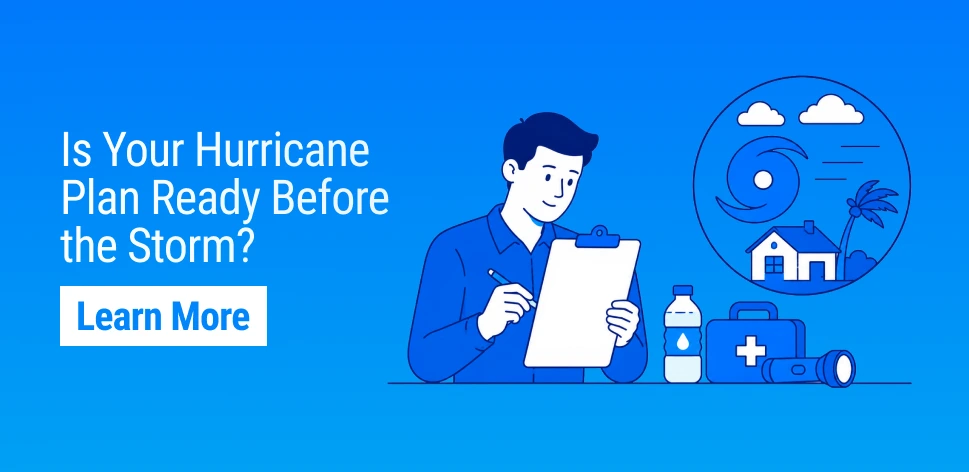
Why Early Season Storm Activity Matters
Many people assume hurricane preparedness becomes important only when a storm is approaching.
In reality, hurricane season preparation should begin long before a weather system appears on the forecast.
The 2026 Atlantic hurricane season has already produced its first named storm. Tropical Storm Arthur developed in mid-June and brought heavy rainfall and flash flooding to portions of the northern Gulf Coast. Although Arthur was considered a relatively weak tropical storm from a wind perspective, it’s slow movement demonstrated one of the most important lessons of hurricane season: significant insurance losses can occur even when a storm never reaches hurricane strength. Weather systems do not always remain confined to coastal communities. Heavy rain, flooding, tornados, wind damage, and power outages can affect states hundreds or even thousands of miles from where a storm initially develops.
These events serve as a valuable reminder that preparation should begin before a named storm becomes a headline.
What Tropical Storm Arthur Teaches Us About Risk
Tropical Storm Arthur serves as an excellent reminder that storm intensity and storm impact are not always the same thing.
While Arthur’s sustained winds remained relatively modest, the storm’s slow movement allowed heavy rainfall to accumulate over already saturated areas. As a result, flooding became the primary concern rather than wind damage.
This distinction is important because many policyholders focus exclusively on hurricane categories and wind speeds. In reality, water is often responsible for some of the costliest losses associated with tropical weather systems.
For homeowners and insurance professionals alike, Arthur highlights the importance of understanding flood exposure, reviewing policy provisions, and preparing before severe weather develops.
Understanding What Your Insurance May Cover
One of the most common misconceptions during hurricane season is the belief that there is a specific “hurricane insurance” policy.
Coverage often comes from multiple policy provisions depending on the type of damage sustained.
For example:
- Wind damage may be covered under a homeowners policy. • Hail damage may be covered under a homeowners policy. • Flood damage is often excluded from standard homeowners policies. • Additional endorsements may apply depending on location and carrier.
Coverage varies significantly between carriers and policies. Homeowners should carefully review deductibles, exclusions, endorsements, and policy limits with their insurance professional.
Understanding coverage before a loss occurs helps eliminate surprises during the claims process.
Flood Coverage Continues to Be Overlooked
Flooding remains one of the most misunderstood risks associated with tropical weather.
Many homeowners assume that if they have homeowners insurance, they also have flood coverage.
Unfortunately, that is often not the case.
Flood insurance is frequently purchased as a separate policy and may involve waiting periods before coverage becomes effective. Waiting until a storm enters the forecast may leave homeowners without the protection they expected.
Even properties located outside traditional flood zones can experience flooding from excessive rainfall, overflowing drainage systems, and storm-related water accumulation.
Insurance professionals should encourage customers to evaluate their flood exposure annually rather than only when a storm is approaching.
Preparation Is About More Than Insurance
While insurance is an important component of hurricane preparedness, it is only one piece of the overall plan.
Things you should try to review with your homeowners:
- Reviewing policy limits annually • Confirming contact information with carriers and agents • Documenting home improvements • Creating a home inventory • Storing important documents electronically • Understanding deductibles and coverage triggers • Developing an emergency preparedness plan
Taking these steps before a storm develops can reduce stress and improve recovery efforts following a weather event.
2026 Atlantic Storm Names
| Early Season Storm Names |
| Arthur |
| Bertha |
| Cristobal |
| Dolly |
| Edouard |
| Fay |
| Gonzalo |
| Hanna |
| Isaias |
| Josephine |
As each named storm develops, insurance professionals may experience increased customer questions regarding coverage, deductibles, and claims preparedness.
Summary
Hurricane season is not simply a weather event; it is a preparedness event.
The recent tropical storm activity near Texas demonstrates how quickly weather systems can affect communities across multiple regions. While no one can control when or where storms develop, homeowners and insurance professionals can control how prepared they are before the season intensifies.
Now is the time to review coverage, evaluate flood insurance needs, update records, and ensure policyholders understand what their insurance does and does not cover.
The best time to prepare for a storm is before it appears on the forecast.
FAQs
Q.1 Does homeowners insurance automatically cover hurricane damage?
It depends on the cause of the damage and the policy provisions. Wind and hail damage may be covered under many homeowners policies, while flood damage is often excluded and may require separate coverage.
Q.2 Why should homeowners review their policies before hurricane season?
Reviewing policies before storm activity increases allows time to understand deductibles, coverage limits, exclusions, and any additional protection that may be needed.
Q.3 Is flood insurance only necessary for coastal properties?
No. Flooding can occur from excessive rainfall, overflowing waterways, drainage issues, and other weather-related events. Properties outside traditional flood zones may still be at risk.
Laura Crowell is a seasoned insurance professional with over 25 years of experience specializing in agency contracting, licensing, and appointment management. In her role as Insurance Licensing Administrator at Agenzee, Laura helps streamline processes, enhance customer engagement, and support innovation in licensing and appointment management technology.
With a background in education, a P&C license, and a CPSR designation, Laura brings a strong understanding of the importance of training, communication, and organized data management. She is dedicated to delivering an easy-to-use SaaS platform that simplifies licensing operations and enables administrators to focus on higher-value work.
Disclaimer: This post is for informational purposes only and does not constitute legal or compliance advice. Agenzee does not warrant the accuracy of and assumes no liability for reliance. Please consult regulators or professional advisors as needed. See our full disclaimer for details.
Subscribe
Stay Ahead with Agenzee Insights
Join our community to stay up-to-date on the latest news and strategies for license and appointment management
INDUSTRY INSIGHTS FOR INSURANCE AGENCIES, CARRIERS, AND MGAS
Similar Blogs
Read our blog to discover the latest industry insights and trends in license and appointment management.

let's catch up!
Schedule a Live 1-On-1
Demo of Agenzee!
Our insurtech experts would be thrilled to give you a personalized demo of how Agenzee can transform your compliance management processes.
Customers Opinions on Our Services and Products
What Our Customers Say
Find out why our customers are happy they chose Agenzee.