

Published On: May 11, 2026
Updated On: May 14, 2026
How AI is Transforming Insurance Carrier Operations, Compliance, and Governance (2026 Guide)

A New Era for Carrier Operations
In a rapidly shifting industry, this year may be defined by uncertainty as much as growth for insurance carriers, with impacts reverberating across Lines of Authority (LOAs). Researchers predict that rising claims severity, talent shortages, affordability pressures, and accelerating digital transformation demands will dramatically shape the future of carrier experience.
For many insurance carriers, AI is the solution. Embracing tools like real-time compliance monitoring and predictive analytics, carriers are harnessing AI to navigate dynamic, evolving risks and elevate operations. While hurdles like enforcing proper AI governance inevitably arise with the rapid adoption of AI in insurance, carriers can implement informed strategies to drive growth and resilience.
Specifically, the impact of AI automation on insurance operations and compliance has made it essential to growth. Whether they’re automating appointment management, claims management, or producer onboarding, AI-enhanced strategies will carry insurers into the future of their industry.
Expert Insight:
“In 2025, 72% of carriers in North America reported that labor shortages were impacting their organization’s ability to grow and manage claims efficiently” – Gallagher Basset
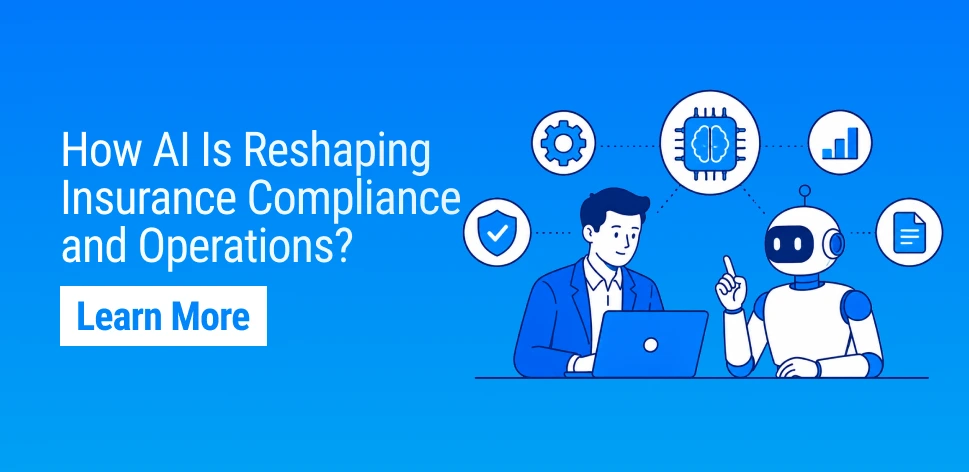
AI in the Insurance Carrier Workflow
Understanding the core internal processes and challenges faced by carriers exposes the gaps where AI can generate powerful, ROI-driving transformations.
What is an Insurance Carrier?
Also known as insurers, insurance carriers are the entities legally responsible for creating, underwriting, and distributing insurance policies. Carriers assess risk, pool capital, manage claims, and collaborate with producers to bring insurance products to market.
Managing policies, producer licensing, regulatory compliance, and claims are key elements of the carrier workflow that generate their own unique challenges. Specifically, AI can be applied to improve each aspect of the typical carrier workflow.
| Carrier Operations Workflow | AI Application |
| Producer Licensing | Verifying producer credentials, tracking license statuses, and managing compliance requirements across state lines |
| Appointment Management | Assisting application processing, timeline management, and submission procedures |
| Claims Management | Automated intake, streamlined data handling, fraud detection, and claims decision support |
| Underwriting | Accelerated risk analysis through predictive modeling, faster decisions, and improved accuracy |
| Policy Administration | Dynamic pricing and risk modeling, personalization, recommendation, and customer behavior prediction |
| Compliance Tracking | Monitoring evolving state and federal regulatory requirements, flagging potential violations, and maintaining audit-ready documentation |
| Reporting & Audits | Automated logging, documentation, and data aggregation to support internal audits and regulatory reviews |
| Billing & Payments | Payment scheduling and optimization, predictive revenue management, and anomaly detection |
Across these categories, carriers face challenges maintaining data integrity, preventing cybersecurity risks, and staying compliant with regulations that vary from state to state. More than a helpful way to automate inefficient operational procedures, AI automation solutions are essential to meeting tightening carrier-specific compliance requirements that span the operational lifecycle.
Tightening Compliance Obligations for Carriers
Because they depend on producer distribution, carriers often prioritize licensing and appointment compliance strategies to keep producers active and ensure their products successfully reach the market. However, producer licensing compliance isn’t the only area shaping carrier operations, and wider changes in regulations will have powerful impacts on the use and consequential benefits of AI for carriers.
Industry leaders report that the insurance carrier regulatory landscape is shifting from guidance-based expectations to increased accountability. On a regular basis, carriers are responsible for meeting regulations around market conduct exams, financial reporting, and state filings, to name a few. Distinctly, many of the most important emerging regulations center around AI governance and bias, and are essential to account for when choosing to adopt AI or integrate with insurance compliance software.
AI Governance & Regulatory Risk
The NAIC has set five core principles to guide the ethical use of AI in the insurance industry: transparency, accountability, fairness and equity, privacy and data protection, and safety and reliability. Going forward, new developments will continue to affect the use of AI for carriers.
- New Evaluation Strategies: Tools like the NAIC’s draft AI systems evaluation tool will require carriers to formally document how their AI models are built, tested, and governed.
- Human Review Requirements: New laws will enforce human review for automated decisions made with AI. For example, Florida’s HB 527 bill, effective July 1, 2026, requires human review for AI-driven claims denial decisions.
- Protections Against Algorithmic Discrimination: Regulations set in Colorado’s SB 24-205, effective February 1, 2026, are intended to prevent “algorithmic discriminations” through AI bias auditing.
- Unified Compliance: The NAIC’s Big Data and AI Working Group is exploring a model law to govern how insurers use AI, potentially standardizing compliance rules across states.
Source: Capstone
NAIC’s AI Model Bulletin
Created in 2023, the NAIC AI Model Bulletin was developed to assist insurance carriers with responsible AI use. Since then, multiple developments have been released, addressing strategies for risk mitigation, governance, and internal controls. Recent regulations highlight data security and integrity, model access, third-party and vendor risk management, and incident response.
As of March 2026, 25 states and jurisdictions have already adopted and implemented the Model Bulletin, proving that staying abreast of AI regulations will be crucial for successful carrier operations and compliance strategies into the future.
Expert Insight:
“AI, including AI Systems, can present unique risks to consumers, including the potential for inaccuracy, unfair discrimination, data vulnerability, and lack of transparency and explainability. Insurers should take actions to minimize these risks.” – NAIC Model Bulletin: Use of Artificial Insurance Systems By Insurers
How AI is Already Transforming Carrier Operations
Intensifying regulations should seed confidence, not panic. As the use of AI in insurance carrier operations continues to expand, ethical implementation will help ensure carriers are able to enjoy all the transformative benefits AI can provide. From same-day processing to leaps in ROI, AI’s impact on claims, underwriting, billing, and fraud detection is why 90% of insurers are increasing their AI budgets year after year.
| Carrier Operations | Before AI | After AI |
| Producer Licensing | Lower accuracy in requirements verification | Higher accuracy rates for automated data entry and verification |
| Appointment Management | Error-prone manual tracking of deadlines, timelines, and submission rules | Reduced missed filings and shorter appointment processing time |
| Claims Management | Fragmented workflows and inconsistent policy interpretation | 70% faster claims resolution (IBM) |
| Underwriting | 3-5 days to process standard decisions | 80% reduction in underwriting time (Casey Insurance, Deloitte) |
| Policy Administration | Limited personalization, static pricing models | Real-time pricing adjustments and tailored policy recommendations |
| Compliance Tracking | Reactive monitoring, high risk of missing deadlines and regulatory changes | 26% improved monitoring coverage (IBM) |
| Reporting & Audits | Manual documentation, audit vulnerabilities | 50% reduced audit completion time, 30% increased accuracy, 25% reduced labor costs (Research Gate) |
| Billing & Payments | Manual payment processing | Reduced processing errors and accelerated payment cycles |
With these benefits of AI in insurance, adopting AI is the next step for carriers seeking to transform operations and compliance, especially at the level of appointment and producer management.
Pro Tip: AI is most effective when paired with experienced human oversight. While AI can improve speed, organization, and operational efficiency, insurance carriers should not rely on automation alone for critical compliance, underwriting, claims, or appointment decisions. Because AI-generated outputs can contain inaccuracies, incomplete information, and unintended bias, human review is essential.
Scaling Carrier Appointment & Producer Management
Through compliance monitoring, fraud detection, and appointment validation logic, AI serves as a powerful tool for managing appointments and producer oversight. When it comes to scaling carrier appointment management and producer onboarding, however, carriers face specific financial and regulatory risks that AI is especially equipped to help them prevent.
For example, managing producer appointments across multiple states generates demanding compliance obligations, as every state has its own rules. Specific areas include:
- State-Specific Appointment Timelines: Appointment timelines vary by state, adding complexity to appointment management.
- Just-In-Time (JIT) Appointment Compliance: Depending on the state, carriers may have as little as 15 to 30 days from a producer’s first piece of submitted business to file an appointment.
- Supporting Appointment Submission: Carriers need to ensure producer data is accurate and complete for each state before submitting to NIPR.
- General Producer Oversight: Carriers have compliance responsibilities that extend beyond their own systems to include producers and third-parties within their distribution network.
At scale, when these challenges aren’t met, they become liabilities. AI provides solutions like compliance technology, documentation management, and centralized data hubs that address hard-to-manage complexities, supporting scalability, operational efficiency, and most importantly, carrier growth.
Data Integrity, Cybersecurity & Audit Readiness
Finally, data and cybersecurity risks are only becoming more sophisticated in 2026, urging insurance carriers to implement ongoing monitoring and threat detection to ensure a strong foundation in data integrity. Over 50% of insurance executives prioritize data governance, security, and privacy in their data strategies. They know that data quality is not only essential for compliance but a key component of building and deploying effective AI solutions.
Proactive, rather than reactive responses, are necessary for an effective security approach. Carriers that implement active monitoring and vulnerability detection will avoid the legal and reputational consequences of data breaches, including bad faith claims, regulatory fines, and third-party liability suits.
AI helps carriers maintain clean records and prepare for audits. It can help carriers centralize documentation for transparency during audits and regulatory reviews, continuously review internal policies to ensure alignment with regulations, and support AI governance strategies that make sure AI usage stays compliant as well. Leading to a 43% better understanding of the audit risk landscape, AI-driven technology can help carriers stay proactive, prepared, and protected while they leverage AI for operations and compliance.
FAQs
Q.1 How are insurance carriers using AI?
Insurance carriers use AI in every part of their operations, from tracking producer licenses, to automating claims management, to enhancing audit preparation.
Q.2 Does AI improve insurance carrier operations?
Research has found that AI reduces the time spent on routine tasks, streamlines workflow, increases accuracy, and enhances decision-making to greatly improve insurance carrier operations.
Q.3 What are the key AI governance regulations carriers need to know?
The NAIC has set five core principles that form the foundation of AI governance for carriers. Additional regulations such as the NAIC’s draft AI evaluation tool are pushing formal documentation, human review requirements, and bias auditing.
Q.4 Does AI support carrier compliance and audit readiness?
Of course. AI helps carriers centralize documentation, monitor regulatory changes, flag potential violations, and maintain audit-ready records to reduce non-compliance.
Q.5 Can AI help carriers manage producer compliance across multiple states?
Yes! AI helps carriers handle multi-state licensing and appointment management, tracking complex requirements around submission timelines, expirations, and deadlines to prevent non-compliance.
The Future of AI in Insurance Carrier Operations
In the face of growing regulatory pressure and shifting market expectations, insurance carriers must treat AI adoption and governance as core operational priorities. From producer verification to claims, billing and audit readiness, AI is transforming every aspect of the typical insurance carrier workflow with greater speed, accuracy, and control.
By embedding AI across operations, carriers can reduce compliance risk, strengthen data integrity, and scale complex multi-state processes with confidence. Platforms like Agenzee can help carriers stay ahead of potential fines and liabilities, leaving no limit to how insurance carriers can scale operations, all the while keeping compliant, secure, and ready for anything.
Allison is a Content Writer at Agenzee, creating blogs, case studies, social media content, and other value-driven materials to support overall marketing strategies and spur brand growth. Her storytelling expertise infuses her work with a clear, captivating voice that successfully drives conversion and engagement.
Educated in anthropology at Princeton University, Allison’s unique background in software solutions, fiction writing, ethnographic research, and tutoring gives her a unique perspective on the insurance licensing world, enabling her to pursue her mission: Making Agenzee the leader of insurance modernization.
Disclaimer: This post is for informational purposes only and does not constitute legal or compliance advice. Agenzee does not warrant the accuracy of and assumes no liability for reliance. Please consult regulators or professional advisors as needed. See our full disclaimer for details.
Subscribe
Stay Ahead with Agenzee Insights
Join our community to stay up-to-date on the latest news and strategies for license and appointment management
INDUSTRY INSIGHTS FOR INSURANCE AGENCIES, CARRIERS, AND MGAS
Similar Blogs
Read our blog to discover the latest industry insights and trends in license and appointment management.

let's catch up!
Schedule a Live 1-On-1
Demo of Agenzee!
Our insurtech experts would be thrilled to give you a personalized demo of how Agenzee can transform your compliance management processes.
Customers Opinions on Our Services and Products
What Our Customers Say
Find out why our customers are happy they chose Agenzee.