

Published On: July 2, 2026
Updated On: July 10, 2026
How Software Bridges the Gap Between Producer Licensing Compliance and Sales Teams

Insurance compliance and licensing gaps can happen for many different reasons and result in operational risks for an agency. Expired licenses, missed appointments, regulatory fines, high turnover, and reputational damage are some of the consequences agencies face if they fail to proactively prevent these gaps from developing.
Insurance producer licensing software helps bridge the gaps between licensing and sales teams by creating a central source of truth for producer licensing data, enabling automated workflows on defined triggers, and integrating with core agency software.
This post dives into the causes of compliance and licensing gaps, when gaps become operational risks, and how to bridge the gaps with software to create a scalable digital workflow.
What Causes Insurance Compliance and Licensing Gaps Between Teams?
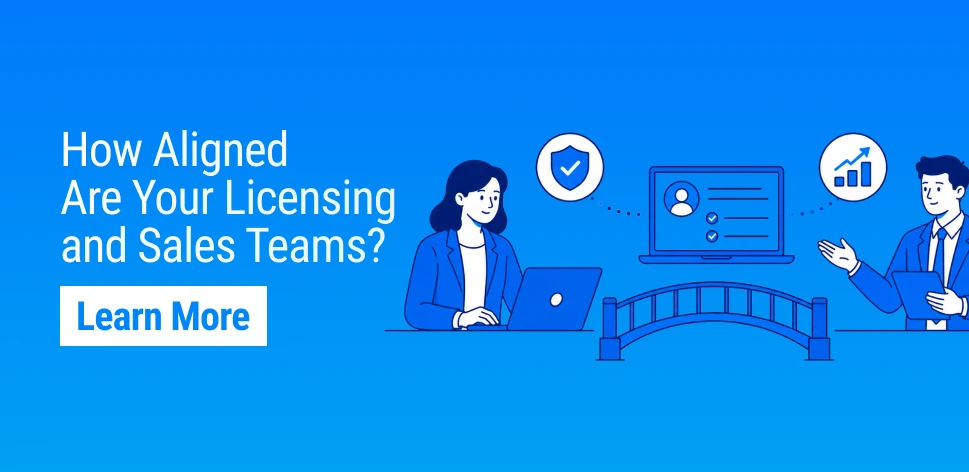
Insurance compliance gaps between licensing and sales teams can occur due to reliance on outdated legacy systems. These systems may have disconnected workflows that require manual upkeep and reduce teams’ confidence in data accuracy. The resulting slow manual verification of licenses causes delays, and ultimately, lost sales opportunities.
A combination of disconnected software systems, data fragmented across spreadsheets, and a lack of central visibility create gaps between sales and licensing teams. The sales team may believe a producer is ready to sell when required appointment or authorization requirements have not yet been completed.
Definition: Insurance Compliance Gap
An insurance compliance gap is a disconnect between what the business believes is ready and what regulatory or internal records show. In producer licensing, this can happen when a producer appears ready to sell but misses an active license, carrier appointment, line of authority, CE completion, or required documentation.
When Do Compliance Gaps Become Operational Risks?
Some of the most significant operational risks stem from persistent oversights and systemic failures. In many instances, what appear to be minor administrative issues grow into regulatory issues over time. For insurance agencies, the primary culprits tend to be data discrepancies, reporting delays, and weak audit trails.
Data discrepancies typically occur when insurers rely on spreadsheets to centralize producer licensing data across NIPR, state, and internal sources. Spreadsheets cannot perform automatic updates when changes occur, leading to discrepancies and inherent risks.
Compliance delays often occur when insurers struggle to keep up with changing state regulations. State regulations can change at any time, and compliance teams relying on manual upkeep of state licensing variations often face operational bottlenecks.
Definition: Audit Trail
In insurance producer license compliance, an audit trail is a documented record that shows when a license was checked, who reviewed it, what status was found, what follow-up occurred, and whether the producer was cleared to sell.
Weak audit trails are the result of failing to have automated documentation built into every step of the licensing process. Incomplete documentation can attract regulatory scrutiny or, in the worst case, result in corrective actions.
When Compliance Gaps Turn into Operational Risk
| Compliance Gap | How It Happens | Operational Risk | Sales Impact |
| Outdated producer license data | License records are tracked manually or updated in spreadsheets after the fact. | Relying on expired, incomplete, or inaccurate producer information. | A producer may be treated as ready to sell before they are fully compliant. |
| Pending or missed appointments | Sales teams assume licensing is complete, but the carrier appointment has not been approved. | Allowing producer activity before required appointment steps are complete. | Sales opportunities may be delayed, reassigned, or exposed to compliance review. |
| Disconnected systems | Licensing data, CRM activity, onboarding documents, and compliance records live in different places. | Teams lack a complete view of producer readiness. | Sales and compliance teams spend more time checking status than moving producers forward. |
| Manual renewal tracking | Renewal dates, CE requirements, and follow-ups are tracked through calendars, emails, or spreadsheets. | Missed deadlines can create inactive licenses, reinstatement work, or regulatory exposure. | Producers may be temporarily unable to write business in certain states. |
| Weak audit trails | Licensing actions, status checks, and approvals are not automatically documented. | The agency may struggle to prove what was checked, when, and by whom. | Sales activity may be harder to defend if a compliance issue is questioned later. |
| Slow exception handling | Missing licenses, appointments, CE, or documentation are found late in the process. | Compliance teams become reactive instead of proactive. | Producers may lose momentum during onboarding or sales activation. |
The Consequences of Compliance, Operations, and Sales Team Misalignment
Fragmented processes are a common cause of disconnect between producer sales and compliance teams. Some of the consequences include:
- Slow onboarding – Operational inefficiencies can create repetitive administrative work that slows onboarding.
- Regulatory risk – Manual tracking, human error, and other operational shortcomings expose the agency to regulatory risks.
- Lost revenue – Slower onboarding, administrative delays, and lapsed licenses directly impact revenue.
- Team frustrations – One study found that 80% of insurance professionals view the compliance and sales teams’ relationship as adversarial.
Missed opportunities are one of the most significant consequences of misalignment between sales and compliance teams. By the time compliance checks finish, the sales opportunity may have already passed. However, manual compliance processes for producer licensing are time-consuming and conflict with the goals of sales teams.
How Do You Bridge the Gaps Between Insurance Licensing and Sales Teams?
Agencies can bridge the gap between licensing and sales teams by implementing software that integrates with the agency’s CRM and centralizes producer licensing, appointment, renewal, and CE information. As a result, agencies can proactively monitor producer readiness and address issues before they impact sales activity.
Insurance compliance and licensing software bridges the gap between teams by integrating data from NIPR, state databases, and internal systems to provide a single source of truth. Typically, producer licensing data is spread across multiple systems, requiring teams to invest significant time reconciling data.
Definition: Single Source of Truth
A single source of truth is one centralized system where the same current producer licensing and compliance data exists in contrast to having multiple spreadsheets, outdated records, email threads, or disconnected systems.
By leveraging licensing software, teams can reduce the amount of manual labor spent verifying license data and focus on streamlining producer readiness instead. An API connects existing core business software (CRM) with producer licensing software.
Accelerate Onboarding with Self-Service
Producer onboarding is traditionally paper-heavy or email-based, but a self-service portal and digital document collection can help speed up the process. Producers can leverage a self-service portal online or via an app to upload required onboarding documents and track approval. On the compliance end, teams can quickly compare licensing data and identify any remaining requirements needed for producer readiness.
Automate Responses to Trigger Events
Set up automated notifications for triggering events to reduce the number of manual emails sent. For example, suppose a license renewal is approaching. A renewal reminder email is automatically sent to the producer 90, 60, and 30 days before the expiration date. You can also automatically flag, restrict, or prevent producer activity when licensing requirements have not been met.
Definition: Trigger Event
A trigger event is a defined action or status change that causes an automated workflow to begin. For example, an upcoming license renewal may trigger reminder emails or a compliance task.
Auto-Update License Statuses
Sync producer licensing software with NIPR and state licensing data sources to receive regular updates to producer license and appointment information. Compliance teams will be able to skip most of the manual data entry work and sales teams will get access to the most up-to-date producer information.
Link Commission Payments to License Checks
Make regulatory compliance steps requirements for producer compensation by setting up license checks tied to incoming commissions. Integrate producer licensing software with onboarding and payment systems to prevent compensation to producers whose licenses are expired or who have missing appointments or lines of authority.
Improve Collaboration with Shared Dashboards
Collaboration between compliance and sales teams does not have to be adversarial. Insurance producer licensing software allows teams to view shared dashboards with up-to-date visibility into producer licensing records. Teams can view producer appointments, lines of authority, upcoming renewals, CE, and regulatory actions from a centralized dashboard and sort data by carrier, state, or any other metric.
How Software Bridges the Gap Between Compliance and Sales
| Feature | Software Capability | Compliance Benefit | Sales Benefit |
| Central producer record | Centralize license status, appointments, CE, renewals, documents, and regulatory actions. | Reduce manual data reconciliation and create a reliable source of truth. | Gives sales clearer visibility into producer sales readiness. |
| Self-service onboarding | Document uploads, track task completion, check status, and producer follow-up. | Cut down on repetitive emails and manual document collection. | Move producers through onboarding with fewer delays. |
| Automated alerts | Send automatic reminders for renewal deadlines, missing documents, CE gaps, and appointment issues. | Proactively address issues before they become compliance problems. | Reduce last-minute blocks that delay producer activation. |
| NIPR-connected updates | Up-to-date producer license, appointment, renewal, and status information. | Limit manual lookups and keep records more current. | Give sales teams faster answers to confirm producer readiness. |
| Appointment tracking | Track appointment requests, approvals, effective dates, and missing carrier relationships. | Improve oversight of producer authorization to represent a carrier where applicable. | Avoid assigning business before appointment requirements are complete. |
| Commission-linked license checks | Validate license, appointment, and LOA before compensation workflows move forward. | Add a compliance control to payment and producer management processes. | Prevent compensation delays caused by licensing issues discovered too late. |
| Shared dashboards | Dashboards share producer status with both sales and compliance teams. | Provide a structured way to monitor risk and document follow-up. | Reduce back-and-forth with compliance and gives sales a clearer path to action. |
Definition: Producer Sales Readiness
Producer sales readiness means a producer has completed the licensing, appointment, onboarding, documentation, and internal approval steps required to sell for an agency or carrier.
Ready to Bridge the Gap Between Producer Compliance and Sales Readiness?
Producer compliance and sales readiness should ideally work as connected workflows. When licensing data, appointment status, CE tracking, and onboarding documentation live in disconnected systems, teams lose time confirming what should already be clear: whether a producer is ready to sell.
Agenzee helps agencies close that gap with a centralized platform for managing producer licensing, appointments, renewals, compliance alerts, and audit-ready documentation. Instead of relying on spreadsheets, manual follow-ups, and fragmented records, licensing and sales teams can work from the same source of truth.
Compliance teams can identify issues before they become risks, sales teams can move forward with greater confidence, and carriers can support producer growth without adding unnecessary administrative burden.
Ready to connect producer compliance with sales readiness?
Book a demo of Agenzee to see how a modern licensing and appointment management platform can help your team reduce delays, strengthen oversight, and keep producers ready to sell.
FAQ on Insurance Compliance and Sales Team Gaps
Q.1 What causes insurance compliance gaps between licensing and sales teams?
Insurance compliance gaps often happen when licensing and sales teams work from different systems or outdated spreadsheets. These gaps become more obvious when producer data is manually updated and spread across multiple platforms. Without a single source of truth, teams can lose visibility.
Q.2 What is the difference between a producer license and a carrier appointment?
A producer license gives an individual or business entity the legal authority to sell, solicit, or negotiate insurance in a state for specific lines of authority. A carrier appointment connects a licensed producer to a specific insurance carrier where state rules require that relationship to be reported.
Q.3 How do compliance gaps affect producer sales readiness?
Compliance gaps can delay producer sales readiness by making it unclear whether a producer is fully approved to sell. A producer may be missing an appointment, line of authority, CE requirement, or updated license record.
Q.4 How does insurance producer licensing software help agencies?
Insurance producer licensing software helps agencies centralize producer license, appointment, renewal, CE, and compliance data in one place. The software also supports automated reminders, exception alerts, document tracking, and reporting. For agencies, the value is faster administration, better visibility into producer readiness, and stronger compliance documentation.
Q.5 What should agencies track to avoid producer compliance gaps?
Agencies should track producer license status, resident and non-resident licenses, lines of authority, carrier appointments, appointment effective dates, license renewal dates, CE status, regulatory actions, onboarding documents, and internal approval steps.
Q.6 How do sha red dashboards improve collaboration between compliance and sales teams?
Shared dashboards give compliance and sales teams a common view of producer readiness. Instead of relying on back-and-forth emails, both teams can see producer data.
Dashboards help reduce frustration between teams. Sales gets clearer visibility into when producers can move forward, and compliance has a structured way to flag issues, document follow-up, and prevent unauthorized producer activity.
Alexandra is a copywriter and researcher who specializes in evergreen content production. She has authored hundreds of SEO-driven blogs, helping clients translate complex insurance coverage topics into clear, authoritative content.
Alexandra graduated from the University of Oregon with a BA in German: Language, Literature, and History, and a BA in Digital Art. She spent 20 years living abroad in Germany and Spain before returning to the US in 2025.
Disclaimer: This post is for informational purposes only and does not constitute legal or compliance advice. Agenzee does not warrant the accuracy of and assumes no liability for reliance. Please consult regulators or professional advisors as needed. See our full disclaimer for details.
Subscribe
Stay Ahead with Agenzee Insights
Join our community to stay up-to-date on the latest news and strategies for license and appointment management
INDUSTRY INSIGHTS FOR INSURANCE AGENCIES, CARRIERS, AND MGAS
Similar Blogs
Read our blog to discover the latest industry insights and trends in license and appointment management.

let's catch up!
Schedule a Live 1-On-1
Demo of Agenzee!
Our insurtech experts would be thrilled to give you a personalized demo of how Agenzee can transform your compliance management processes.
Customers Opinions on Our Services and Products
What Our Customers Say
Find out why our customers are happy they chose Agenzee.