

Published On: February 10, 2026
Updated On: March 3, 2026
District of Columbia Opens 2026 Company Appointment Renewal Period
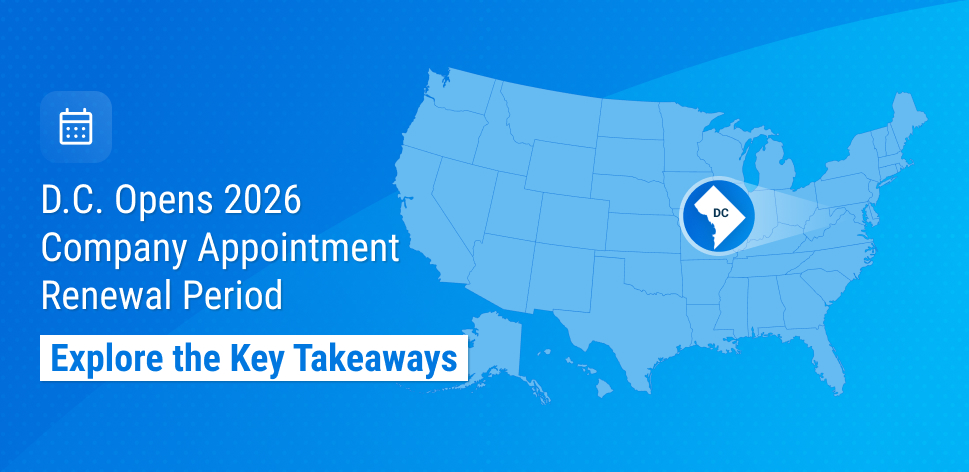
The District of Columbia Department of Insurance has released renewal details for 2026 company appointments. The renewal window opens March 4, 2026 and closes May 31, 2026, with all transactions required to be completed electronically through NIPR. This renewal cycle includes firm termination deadlines, mandatory continuation fees for listed licensees, and specific payment limitations based on method. Companies should prepare early to avoid late payment issues, processing delays, or unintended appointment renewals.
Renewal Timeline and Key Dates
The District of Columbia’s 2026 Company Appointment Renewal period officially opens on March 4, 2026, at 8:00 AM Central Time and closes on May 31, 2026, at 5:00 PM Central Time. All appointment types across all license classes are included in this renewal cycle.
There is no late renewal period offered for DC company appointments. Payments not completed by the May 31 deadline may result in appointment expiration. Renewed appointments will reflect a new expiration date of April 30, 2027, on the Producer Database (PDB).
Companies should also be aware that termination notices must be submitted well in advance of the renewal window to ensure accurate invoice.
Termination Rules and Appointment Lists
Termination timing is one of the most critical aspects of the DC renewal process. Any individual appointments a company does not wish to renew must be terminated through NIPR no later than February 24, 2026. This allows sufficient processing time before renewal invoices are generated.
Once the appointment invoice and appointment list are created and made available:
- Companies cannot terminate any appointments included on the invoice
- Continuation fees will be due for every Insurance Producer and Title licensee listed
- All listed appointments will be renewed if payment is submitted
This makes it essential for companies to review their appointment data early and submit terminations before the cutoff date.
Fees and Renewal Costs
The District of Columbia has confirmed no state fee changes for the 2026 renewal cycle. The renewal fee remains:
- $25 per appointment, per company
This fee applies to all license classes included on the invoice. Companies should ensure they budget appropriately, especially if managing a large volume of appointments.
In addition to state fees, NIPR processing fees will apply. The NIPR renewal processing fee equals 1% of the total state fee, with:
- A minimum fee of $5
- A maximum fee of $1,000
Payment Methods and Important Processing Limits
All renewal transactions must be processed electronically through NIPR. Continuation invoices cannot be paid directly to the District of Columbia Department of Insurance.
Accepted payment methods include credit card and electronic check, each with important limitations:
Credit Card Payments
- Accepted cards: Visa, MasterCard, and American Express
- Fully electronic processing
- $60,000 payment limit per transaction
- Invoices exceeding $60,000 must use an alternative payment method
Electronic Check Payments
- Funds must be drawn from a U.S., Puerto Rican, or U.S. Virgin Islands financial institution
- Checks over $999,999 cannot be submitted electronically
- For invoices over this amount, companies must mail a check directly to the state for the state fee only
- NIPR transaction fees are not included when mailing a check
Electronic check payments may require bank authorization. If pre-authorization is needed, companies should provide their financial institution with the following information: NIPR ACH – 9431763793
A $25 returned check fee applies if an electronic check does not clear. Payment issues that are not resolved promptly may result in non-renewal or reversal of renewed appointments.
Conclusion / Summary
The District of Columbia’s 2026 Company Appointment Renewal process includes firm deadlines, mandatory electronic processing through NIPR, and strict termination rules. With no late renewal period available, companies should begin reviewing appointment lists well ahead of the February 24 termination deadline and plan payment logistics early. Proper preparation can help prevent unintended renewals, payment delays, and appointment disruptions.
Disclaimer: This post is for informational purposes only and does not constitute legal or compliance advice. Agenzee does not warrant the accuracy of and assumes no liability for reliance. Please consult regulators or professional advisors as needed. See our full disclaimer for details.
Subscribe
Stay Ahead with Agenzee Insights
Join our community to stay up-to-date on the latest news and strategies for license and appointment management
INDUSTRY INSIGHTS FOR INSURANCE AGENCIES, CARRIERS, AND MGAS
Similar Blogs
Read our blog to discover the latest industry insights and trends in license and appointment management.

let's catch up!
Schedule a Live 1-On-1
Demo of Agenzee!
Our insurtech experts would be thrilled to give you a personalized demo of how Agenzee can transform your compliance management processes.
Customers Opinions on Our Services and Products
What Our Customers Say
Find out why our customers are happy they chose Agenzee.