

Published On: April 20, 2026
Updated On: April 23, 2026
Best Software for Insurance Carriers to Manage Producer Licensing in 2026

Producer licensing is one of the most operationally demanding responsibilities for insurance carriers. A straightforward process like verifying a producer license quickly becomes complex when multiple states, appointment requirements, renewal cycles, and compliance are involved.
For many carriers, licensing is still managed through spreadsheets, email chains, and disconnected manual systems. The result is operational friction, delayed onboarding, inconsistent appointment tracking, audit exposure, and increased compliance risk. These challenges become more pronounced as operations scale.
Producer licensing software for insurance carriers is a critical operational component. Instead of relying on manual processes, structured systems centralize licensing tracking, automate workflows, and monitor regulatory actions across states.
This guide explains how licensing software works, what features matter most, and how carriers can evaluate solutions based on operational needs.
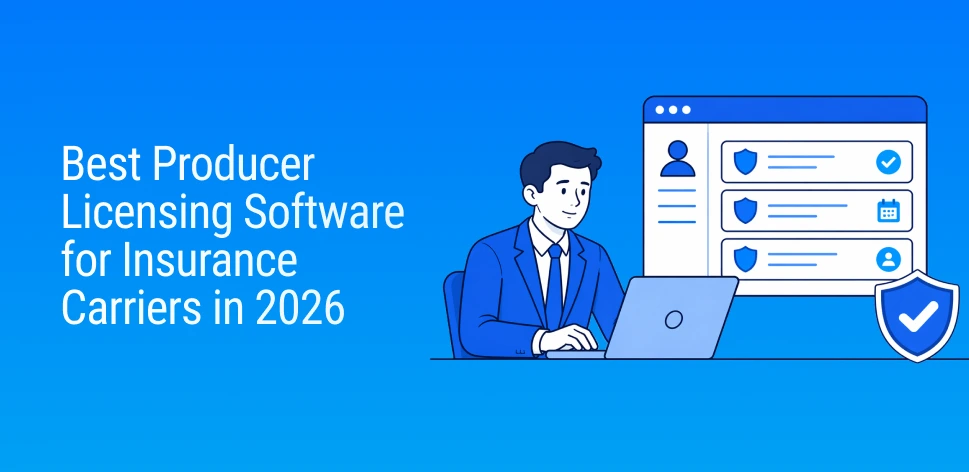
Why Producer Licensing Is Complex for Insurance Carriers
Producer licensing is not a single process. It is an ongoing operational function that spans multiple systems, jurisdictions, and regulatory requirements.
Definition: Producer Licensing
Producer licensing is the regulatory authorization that allows an individual or entity to sell, solicit, or negotiate insurance products.
Each producer must be tracked across:
- Multiple states
- Lines of authority
- Renewal cycles
- Continuing Education (CE) requirements
- Appointment status
These variables do not operate on a single timeline. Each state has its own rules, deadlines, and filing requirements. A producer may be compliant in one state and out of compliance in another at the same time.
For carriers, this creates a coordination problem across licensing, insurance compliance, and operations teams. Data is often stored in different systems, updated at different times, and reviewed through manual processes.
Definition: Insurance Compliance
Insurance compliance is the process of ensuring adherence to regulatory requirements, including licensing, appointments, renewals, and documentation. For carriers, compliance involves maintaining accurate records, monitoring deadlines, and demonstrating audit readiness across all jurisdictions and producer relationships.
What Is Producer Licensing Management Software?
At a basic level, licensing management software answers three operational questions:
- Is the producer licensed for this state and line of authority?
- Is the appointment active where required?
- Are there any upcoming compliance risks or gaps?
Instead of relying on spreadsheets and periodic checks, producer licensing management software provides centralized and up-to-date visibility into licensing status and compliance conditions.
Definition: Licensing Management Software
Licensing management software is a system that tracks producer licenses, renewal deadlines, appointment status, and regulatory requirements across multiple states. For insurance carriers, it centralizes licensing data, reduces manual tracking, and improves visibility.
Key Features to Look for in the Best Licensing Software
Licensing software should provide visibility, enforce compliance, and support operational workflows across licensing, appointments, and renewals.
Key features to look for:
- Multi-state license tracking
- Appointment management
- NIPR integration
- Compliance alerts
- Reporting & audit support
- Workflow automation
- Document management
The goal is control, accuracy, and consistency across carrier operations.
Definition: NIPR
NIPR (National Insurance Producer Registry) is a centralized system that supports licensing transactions, appointment processing, and access to producer data. Insurance carriers use NIPR integration software to validate licensing information, streamline regulatory filings, and maintain accurate, up-to-date records across jurisdictions.
multi-state license tracking
Carriers must track license status across all jurisdictions where producers operate.
A functional insurance compliance system should:
- Display license status by state and line of authority
- Track renewal deadlines and CE requirements
- Identify inactive, expired, or at-risk licenses
- Maintain a single source of truth for licensing data
Without centralized tracking, license status becomes fragmented and difficult to verify.
Definition: Insurance Compliance System
An insurance compliance system is software that monitors regulatory requirements and enforces compliance through alerts, workflows, and reporting. It helps carriers identify risks such as expired licenses or missing appointments and ensures that licensing and operational activities remain aligned with state regulations.
Appointment management
Appointment tracking ensures producers are authorized to represent the carrier where required.
The system should:
- Track appointment creation, renewal, and termination
- Support state-specific appointment rules
- Align appointment status with license status
- Provide visibility into active vs inactive appointments
Gaps between licensing and appointment data are a common source of compliance risk.
NIPR integration
NIPR integration software reduces manual verification and improves data accuracy.
The system should:
- Validate license data against NIPR records
- Support appointment processing workflows
- Reduce duplicate data entry
- Keep producer records current
Without integration, teams often rely on manual checks that are difficult to scale.
Compliance alerts
Compliance alerts surface issues before they become violations.
The system should:
- Notify teams of upcoming license expirations
- Flag missing appointments or documentation
- Identify CE compliance gaps
- Trigger alerts based on rule-based conditions
This shifts compliance from reactive to proactive.
Reporting & audit support
Licensing data must be accessible and verifiable.
The system should:
- Generate audit-ready reports
- Maintain historical activity logs
- Provide status summaries across producers and states
- Support internal and regulatory reporting requirements
Audit readiness depends on data accuracy and accessibility, not manual reconstruction.
Workflow automation
Licensing is a process, not a static record. Workflow automation connects tasks across teams.
The system should:
- Route tasks between licensing, compliance, and operations
- Trigger actions based on status changes
- Standardize approval and review processes
- Reduce manual follow-up and coordination
Without workflow structure, processes slow down and errors increase.
Document management
Licensing requires complete and accessible documentation.
The system should:
- Store contracts, forms, and certifications
- Link documents to producer records
- Track missing or incomplete files
- Provide centralized access for audits
Disorganized documentation creates delays and compliance exposure.
Feature Table: Core Capabilities and Risks
| Feature | Operational Purpose | Risk if Missing |
| Multi-state tracking | Centralize license visibility | Fragmented data, missed expirations |
| Appointment management | Track producer authorization | Unauthorized selling risk |
| NIPR integration | Validate regulatory data | Manual errors, outdated records |
| Compliance alerts | Surface risks early | Missed deadlines, violations |
| Reporting & audit support | Provide verifiable records | Audit delays, incomplete data |
| Workflow automation | Coordinate processes | Bottlenecks, inconsistent execution |
| Document management | Maintain required records | Missing documentation, delays |
Benefits of Using Licensing Software for Carriers
Licensing software improves compliance control, reduces manual workload, and increases operational efficiency across carrier operations.
Key benefits include:
- Reduced compliance risk
- Faster producer onboarding
- Improved visibility into licensing and appointment status
- Fewer manual errors and rework
- Centralized licensing tracking
- Stronger audit readiness
- Scalable licensing and compliance operations
A modern carrier compliance software environment helps teams move from reactive tracking to controlled workflows. Instead of chasing renewals and appointment gaps after the fact, licensing teams can manage issues before they affect distribution.
Challenges of Manual Licensing Management
Manual licensing management usually depends on spreadsheets, email reminders, shared folders, and tribal knowledge. That approach may work for a small book of business, but it breaks down as producer count, state count, and appointment volume increase.
Common challenges:
- Fragmented data across systems
- Missed renewal deadlines
- Delayed onboarding
- Limited audit visibility
- High manual workload
Manual vs Automated Licensing Comparison
| Process Area | Manual Approach | Automated Approach |
| License tracking | Spreadsheets | Real-time tracking system |
| Renewals | Calendar reminders | Automated alerts |
| Appointments | Email-based tracking | Structured workflows |
| Compliance | Reactive checks | Continuous monitoring |
| Reporting | Manual compilation | Instant reporting |
The real risk is not just inefficiency. It is inconsistency. When rules vary by state and a producer’s status changes unexpectedly, manual processes are more likely to miss it.
Best Software for Insurance Carrier Licensing Management
The best producer licensing software for insurance carriers is defined by how well it supports licensing, appointment management, compliance, and workflow execution at scale. There are many insurance carrier solutions available. The right system depends on operational complexity, regulatory exposure, and how licensing workflows are structured across teams. The ideal solution depends on how licensing data is sourced, validated, and managed across systems.
Key Capabilities to Look For:
- Real-time license verification – Validates producer license status against state or centralized data sources to ensure accuracy.
- Automated alerts – Tracks renewal deadlines and notifies teams before licenses expire or fall out of compliance.
- Carrier appointment management – Manages appointment creation, renewal, and termination across states.
- Compliance monitoring – Continuously evaluates licensing and appointment status against regulatory requirements.
Most carrier licensing operations rely on a combination of state systems, NIPR, and internal or third-party licensing management platforms.
Definition: Carrier Appointment
A carrier appointment is the formal authorization that allows a licensed producer to represent a specific insurance carrier. Carriers must track appointment creation, renewal, and termination based on state requirements to ensure producers are legally permitted to sell on their behalf.
NIPR (National Insurance Producer Registry)
NIPR provides centralized access to licensing data and supports transactions such as license applications, renewals, and appointment processing.
Best suited for:
- Multi-state licensing operations
- Standardized data access across jurisdictions
- Integration into internal systems through APIs
State-Based Systems (SBS)
State-Based Systems provide direct access to regulatory data maintained by individual states. These systems support licensing transactions, status verification, and regulatory filings.
Best suited for:
- Direct interaction with state regulators
- Access to real-time licensing data
- State-specific licensing workflows
Insurance Producer Licensing Management Software
Carrier licensing systems sit on top of regulatory data sources and are used by carriers to manage licensing, appointments, compliance, and workflows internally.
Best suited for:
- Centralized licensing tracking
- Appointment management
- Workflow automation across teams
- Ongoing compliance monitoring
How to Choose the Right Software for Your Carrier
Start with workflow, not branding. A platform that looks strong in a demo may still be the wrong fit if it does not match how your carrier handles onboarding, appointments, hierarchy, approvals, and audits.
Evaluate software against these questions:
- How many producers and jurisdictions do we manage?
- Do we need onboarding plus licensing, or only licensing?
- Do we need appointment renewals and termination workflows?
- What audit reports do we need regularly?
- Which internal systems must this platform connect to?
For many insurance carriers, the right answer is the platform that reduces operational complexity without forcing the team into more workarounds.
How Automation Improves Carrier Compliance
Compliance failures usually come from timing and visibility issues, not lack of effort. A producer license expiration, delayed appointment filing, or missing termination record can happen when tasks sit in disconnected systems. Carrier-focused insurance software reduces that risk by centralizing status and automating routine control points.
Why Modern Insurance Carriers Use Licensing Automation Platforms
Modern carriers use licensing automation platforms because producer distribution has become too dynamic for static tracking methods. Licensing teams need faster onboarding, compliance teams need cleaner evidence, and operations teams need reliable workflow visibility.
Carriers are building a controlled operating model for licensing management. The strongest systems bring together license tracking, appointment management, document handling, and workflow automation in a way that supports carrier operations without turning every exception into a manual project.
FAQ on Producer Licensing Software for Insurance Carriers
Q.1 What is producer licensing software?
Producer licensing software helps carriers track producer licenses, renewals, appointments, documents, and compliance workflows across states.
Q.2 Why do carriers need licensing systems?
Carriers need licensing systems because state rules, appointment requirements, renewals, and audit expectations are too complex to manage reliably through spreadsheets alone.
Q.3 How do carriers track licenses?
Carriers track licenses through insurance compliance management platforms that centralize state status, expiration dates, appointment records, and related documents.
Q.4 What is NIPR integration?
NIPR integration is the connection between carrier software and NIPR services or licensing data. Integration enables teams to validate, process, and monitor producer licensing and appointment information efficiently.
Q.5 What software do insurance carriers use?
Insurance carriers typically use a combination of:
- State regulatory systems (such as SBS)
- Centralized data providers (such as NIPR)
- Internal or third-party licensing management software
These systems work together to provide licensing data, process regulatory transactions, and support internal compliance workflows.
Q.6 What is appointment management?
Appointment management is the process of creating, renewing, tracking, and terminating producer appointments where state law requires.
Q.7 What is an insurance licensing system?
An insurance licensing system is a platform that manages producer license data, compliance alerts, regulatory workflows, and reporting for carriers, agencies, or MGAs.
Alexandra is a copywriter and researcher who specializes in evergreen content production. She has authored hundreds of SEO-driven blogs, helping clients translate complex insurance coverage topics into clear, authoritative content.
Alexandra graduated from the University of Oregon with a BA in German: Language, Literature, and History, and a BA in Digital Art. She spent 20 years living abroad in Germany and Spain before returning to the US in 2025.
Disclaimer: This post is for informational purposes only and does not constitute legal or compliance advice. Agenzee does not warrant the accuracy of and assumes no liability for reliance. Please consult regulators or professional advisors as needed. See our full disclaimer for details.
Subscribe
Stay Ahead with Agenzee Insights
Join our community to stay up-to-date on the latest news and strategies for license and appointment management
INDUSTRY INSIGHTS FOR INSURANCE AGENCIES, CARRIERS, AND MGAS
Similar Blogs
Read our blog to discover the latest industry insights and trends in license and appointment management.

let's catch up!
Schedule a Live 1-On-1
Demo of Agenzee!
Our insurtech experts would be thrilled to give you a personalized demo of how Agenzee can transform your compliance management processes.
Customers Opinions on Our Services and Products
What Our Customers Say
Find out why our customers are happy they chose Agenzee.