

Published On: December 9, 2025
Updated On: February 27, 2026
A Closer Look at Alaska’s New Licensing and Regulatory Requirements Under SB132

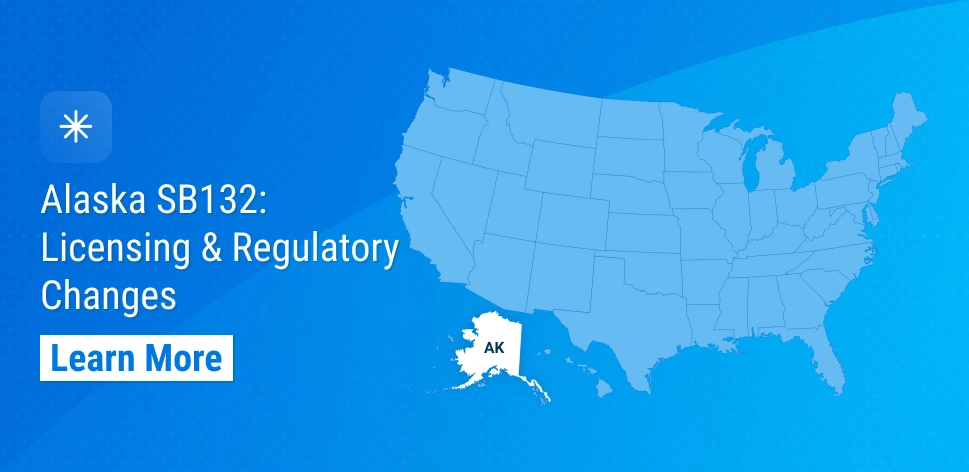
Alaska’s Division of Insurance has issued Bulletin B25-09 to guide carriers, licensees, and compliance professionals through extensive regulatory changes introduced under SB132. Effective January 1, 2026, these updates modernize licensing standards for Pharmacy Benefit Managers (PBMs), Third-Party Administrators (TPAs), Independent Adjusters, and business entities operating within the state. The bulletin also clarifies Alias Name usage and strengthens alignment with the NAIC’s Producer Licensing Model Act. This article breaks down the key changes so agencies and compliance teams can prepare for the year ahead.
Major Licensing Updates for Pharmacy Benefit Managers (PBMs)
PBMs will now operate under a clearly defined licensing structure aligned with Title 21, Chapter 27. A PBM must designate a Compliance Officer (DRLP) licensed under AS 21.27.020(c), though exam requirements are waived. Application fees increase to $20,000, and PBMs must obtain a license regardless of ownership structure. The Division has also expanded examination authority, allowing state and multi-state reviews and requiring PBMs to cover all examination costs. These enhancements bring PBMs into closer regulatory alignment with carriers and other managed-care entities.
Revisions to TPA Licensing and Elimination of Certain Exemptions
Like PBMs, TPAs will now follow expanded licensing expectations under Title 21. TPAs must designate a licensed DRLP, pay a $2,000 application fee, and prepare for more frequent examination oversight. Importantly, SB132 repeals several long-standing exemptions, requiring previously exempt TPAs—particularly those representing foreign insurers—to obtain a license. TPAs must also comply with new quarterly filing requirements, while exempt TPAs must complete annual certifications by February 1 each year. These changes enhance transparency and ensure consistent regulatory accountability.
Independent Adjusters and Designated Home State Licensing
SB132 modernizes Alaska’s adjuster licensing framework by introducing reciprocal licensing for nonresident independent adjusters and enabling Designated Home State (DHS) licensing for applicants whose home states do not license adjusters. The definition of “home state” has been expanded, and distinctions between independent adjusters and portable electronics adjusters have been eliminated. These changes streamline multi-state adjuster licensing and improve accessibility for adjusters serving national carriers.
National Uniformity and Updated Alias Name Guidance
To align more closely with the Producer Licensing Model Act, Alaska has updated the Accident & Health line of authority and improved compliance officer designation rules for business entities. Firms may now designate one compliance officer per line of authority. The Division has also clarified appropriate use of Alias, DBA/Trade Name, and Formerly Known As records in SBS, helping agencies and producers maintain accurate license profiles. Additionally, physical office location requirements and the continuing education advisory committee mandate have been repealed.
Summary
Alaska’s SB132 introduces long-awaited modernization across multiple licensing categories, affecting carriers, PBMs, TPAs, adjusters, and business entities. Compliance teams should begin preparing for the January 1, 2026, effective date by reviewing licensing structures, DRLP requirements, filing deadlines, and appointment-related adjustments. These changes not only strengthen regulatory oversight but also improve national uniformity and administrative consistency. Agencies operating in Alaska should incorporate these updates into their compliance workflows and verify that all licensing data remains accurate in NIPR/SBS.
Johnelee serves as the Senior Marketing Manager at Agenzee, orchestrating strategic growth initiatives and maintaining brand consistency across all marketing touchpoints for Agenzee solutions. Johnelee has created or edited over 100 content pieces on insurance licensing, carrier appointment management, and regulatory compliance. This work helps agencies, carriers, MGAs (Managing General Agents), FMOs (Field Marketing Organizations, TPA (Third Party Administrators), and holding companies navigate the complexities of insurance operations and stay ahead of industry changes.
Johnelee excels at distilling complex insurance processes into accessible content that resonates with insurance professionals. Johnelee collaborates closely with product, sales, customer success, and executive leadership to ensure marketing strategies align with business objectives and customer needs, positioning Agenzee as a trusted partner in modernizing insurance distribution workflows.
Disclaimer: This post is for informational purposes only and does not constitute legal or compliance advice. Agenzee does not warrant the accuracy of and assumes no liability for reliance. Please consult regulators or professional advisors as needed. See our full disclaimer for details.
Subscribe
Stay Ahead with Agenzee Insights
Join our community to stay up-to-date on the latest news and strategies for license and appointment management
INDUSTRY INSIGHTS FOR INSURANCE AGENCIES, CARRIERS, AND MGAS
Similar Blogs
Read our blog to discover the latest industry insights and trends in license and appointment management.

let's catch up!
Schedule a Live 1-On-1
Demo of Agenzee!
Our insurtech experts would be thrilled to give you a personalized demo of how Agenzee can transform your compliance management processes.
Customers Opinions on Our Services and Products
What Our Customers Say
Find out why our customers are happy they chose Agenzee.