

Published On: November 18, 2025
Updated On: February 27, 2026
Insurance License Continuity: Preventing Chain Expiration Events

A resident license isn’t just another credential it’s the foundation of multi-state compliance. When it expires, non-resident licenses connected to it typically terminate automatically, regardless of their individual status. This creates a chain reaction that can lead to compliance violations, business disruption, and reputational risk. Understanding the regulatory link between these licenses is essential for avoiding costly lapses and maintaining uninterrupted selling authority.
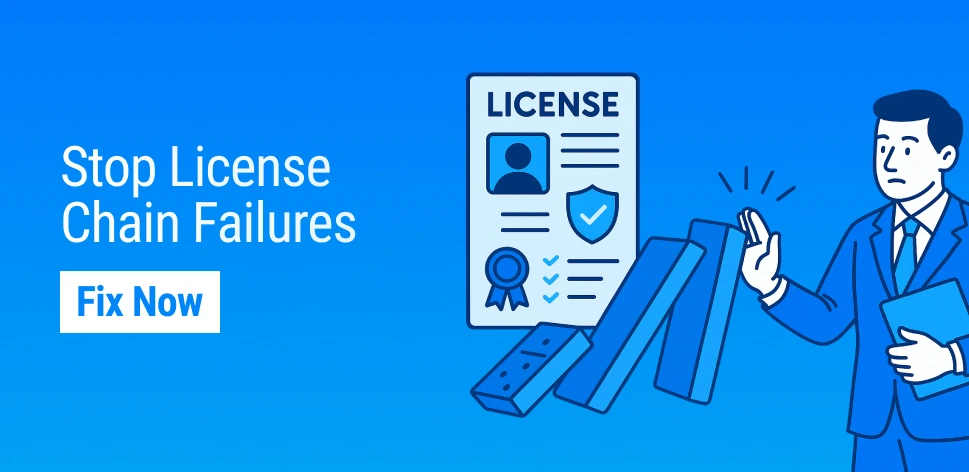
In the insurance licensing framework, the resident license serves as the cornerstone for all non-resident authorizations. When a resident license expires, most non-resident licenses tied to it will automatically terminate, regardless of whether those licenses were otherwise in good standing. This interdependence is often overlooked until an expiration event occurs, creating a chain reaction of compliance issues, loss of selling authority, and potential reputational damage.
The Regulatory Connection
State insurance departments recognize the resident license as the primary credential establishing an individual’s eligibility to hold non-resident licenses. Once it lapses, the foundational authority is removed, leaving the associated non-resident licenses without legal standing. Renewal cycles vary by jurisdiction, and relying on a single reminder can be risky.
Consequences of an Unplanned Expiration
The impact of an expired resident license can extend beyond administrative inconvenience. Producers may face immediate suspension of selling privileges in multiple states, triggering gaps in client service and disrupting business revenue. Restoring full licensure often involves additional fees, reapplication steps, and the potential for heightened regulatory scrutiny.
Preventative Measures
Organizations should implement multi-tier monitoring of license expiration dates, with redundancy built into their alert systems. Internal policies can mandate early renewal well before the statutory deadline to allow for processing delays or unforeseen administrative issues. Maintaining accurate records in a centralized system ensures all stakeholders have visibility into upcoming deadlines, reducing the likelihood of a lapse.
Summary
A resident license expiration is rarely an isolated issue; it is more often the catalyst for a broader compliance breakdown. By treating resident license renewals as a high-priority operational task, insurance professionals can safeguard their non-resident licenses, maintain uninterrupted selling authority, and protect their reputation with both regulators and clients.
Johnelee serves as the Senior Marketing Manager at Agenzee, orchestrating strategic growth initiatives and maintaining brand consistency across all marketing touchpoints for Agenzee solutions. Johnelee has created or edited over 100 content pieces on insurance licensing, carrier appointment management, and regulatory compliance. This work helps agencies, carriers, MGAs (Managing General Agents), FMOs (Field Marketing Organizations, TPA (Third Party Administrators), and holding companies navigate the complexities of insurance operations and stay ahead of industry changes.
Johnelee excels at distilling complex insurance processes into accessible content that resonates with insurance professionals. Johnelee collaborates closely with product, sales, customer success, and executive leadership to ensure marketing strategies align with business objectives and customer needs, positioning Agenzee as a trusted partner in modernizing insurance distribution workflows.
Disclaimer: This post is for informational purposes only and does not constitute legal or compliance advice. Agenzee does not warrant the accuracy of and assumes no liability for reliance. Please consult regulators or professional advisors as needed. See our full disclaimer for details.
Subscribe
Stay Ahead with Agenzee Insights
Join our community to stay up-to-date on the latest news and strategies for license and appointment management
INDUSTRY INSIGHTS FOR INSURANCE AGENCIES, CARRIERS, AND MGAS
Similar Blogs
Read our blog to discover the latest industry insights and trends in license and appointment management.



let's catch up!
Schedule a Live 1-On-1
Demo of Agenzee!
Our insurtech experts would be thrilled to give you a personalized demo of how Agenzee can transform your compliance management processes.
Customers Opinions on Our Services and Products
What Our Customers Say
Find out why our customers are happy they chose Agenzee.