

Published On: February 6, 2026
Updated On: February 11, 2026
Illinois Implements Fee Increases for Non-Resident Public Adjuster Licenses in 2026
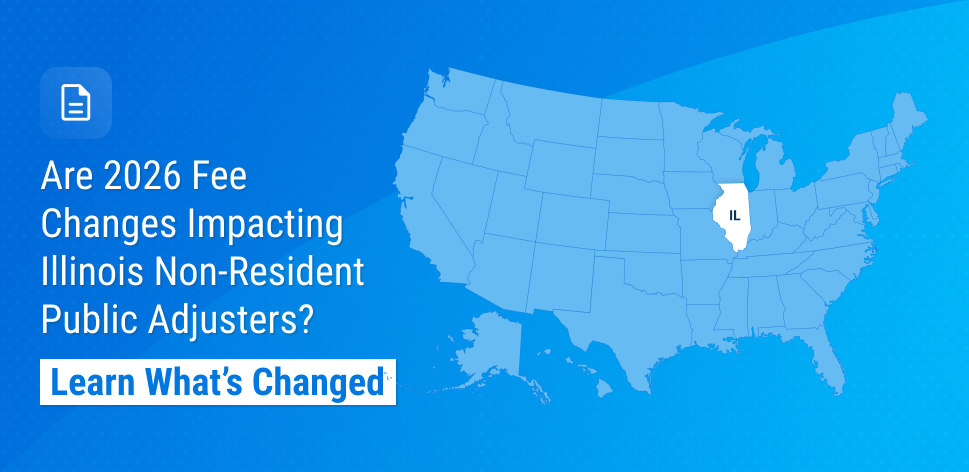
The Illinois Department of Insurance has implemented updated licensing fees for non-resident public adjusters, effective January 1, 2026. These changes affect both individual and business entity adjusters, including those without a designated home state. With increases to initial application, renewal, and reinstatement fees, organizations must account for higher costs and ensure compliance workflows are adjusted accordingly. This update highlights the importance of proactive license management and accurate tracking across multi-state operations.
Understanding the Illinois Fee Update
Effective January 1, 2026, Illinois has revised its fee structure for non-resident public adjuster licenses. The update applies to both standard non-resident adjusters and non-resident adjusters without a home state and impacts new applications, renewals, and reinstatements. These changes were communicated through NIPR and apply to electronic processing through the Gateway.
While the licensing process itself remains unchanged, the cost to obtain and maintain compliance in Illinois has increased significantly. Organizations with public adjusters operating in or expanding into Illinois should review these changes closely to avoid unexpected expenses or delays.
Revised Fee Structure at a Glance
Illinois has doubled several key fees for individual non-resident public adjusters:
- Initial License Fee Increased from $250 to $500
- License Renewal Fee Increased from $250 to $500
- Reinstatement Fee (Individual) Increased from $500 to $1,000
For business entity public adjusters, one notable change includes:
- Reinstatement Fee Reduced from $500 to $250
These updates apply to the following license types:
- Non-Resident License (NRL)
- Non-Resident Adjuster License – No Home State (NRALNHS)
- Non-Resident Renewal (NRR)
Non-Resident Adjuster Renewal – No Home State (NRARNHS)
Operational and Budgetary Impact
Fee increases of this magnitude can have a meaningful impact on compliance budgets, especially for organizations managing large volumes of non-resident adjusters. Teams responsible for licensing should ensure that internal forecasts, renewal schedules, and accounting processes reflect the updated costs.
From an operational perspective, accurate license tracking becomes even more critical. Missed renewals or reinstatements now carry a higher financial penalty, reinforcing the need for advance notifications, centralized records, and clear ownership of licensing responsibilities.
Gateway Processing and System Considerations
The Illinois update impacts Gateway-processed non-resident license and renewal transactions but does not affect appointments, terminations, Producer Database (PDB) reporting, or PDB Alerts. Organizations submitting applications electronically should ensure that their systems, workflows, and payment approvals align with the revised fee amounts to avoid processing delays.
As state-specific licensing rules continue to evolve, maintaining visibility into fee changes and regulatory updates is essential for compliance accuracy.
What Organizations Should Do Next
To prepare for this update, insurance organizations and public adjusting firms should:
- Review Illinois non-resident adjuster populations and upcoming renewal cycles
- Update internal fee schedules and compliance budgets
- Communicate changes to finance and accounting teams
- Confirm licensing platforms reflect updated state fees
- Leverage automation and reporting tools to reduce manual oversight
Taking proactive steps now can help avoid last-minute surprises and ensure continued compliance in Illinois.
Conclusion / Summary
Illinois’ update to non-resident public adjuster licensing fees represents a significant cost increase for individuals and a notable adjustment for business entities. Effective January 1, 2026, organizations must account for higher application, renewal, and reinstatement fees while maintaining accurate, timely compliance processes. Staying informed and operationally prepared is key to minimizing disruption and ensuring ongoing regulatory alignment.
Disclaimer: This post is for informational purposes only and does not constitute legal or compliance advice. Agenzee does not warrant the accuracy of and assumes no liability for reliance. Please consult regulators or professional advisors as needed. See our full disclaimer for details.
Subscribe
Stay Ahead with Agenzee Insights
Join our community to stay up-to-date on the latest news and strategies for license and appointment management
INDUSTRY INSIGHTS FOR INSURANCE AGENCIES, CARRIERS, AND MGAS
Similar Blogs
Read our blog to discover the latest industry insights and trends in license and appointment management.

let's catch up!
Schedule a Live 1-On-1
Demo of Agenzee!
Our insurtech experts would be thrilled to give you a personalized demo of how Agenzee can transform your compliance management processes.
Customers Opinions on Our Services and Products
What Our Customers Say
Find out why our customers are happy they chose Agenzee.