Top Challenges Insurance Carriers Face in Compliance and Licensing
For insurance carriers, regulatory oversight affects nearly every operational process, including onboarding producers, issuing policies, tracking license renewals, and preparing for compliance audits. Because insurance regulation in the United States is largely administered at the state level, insurers navigate separate regulatory frameworks for each producer in each state.
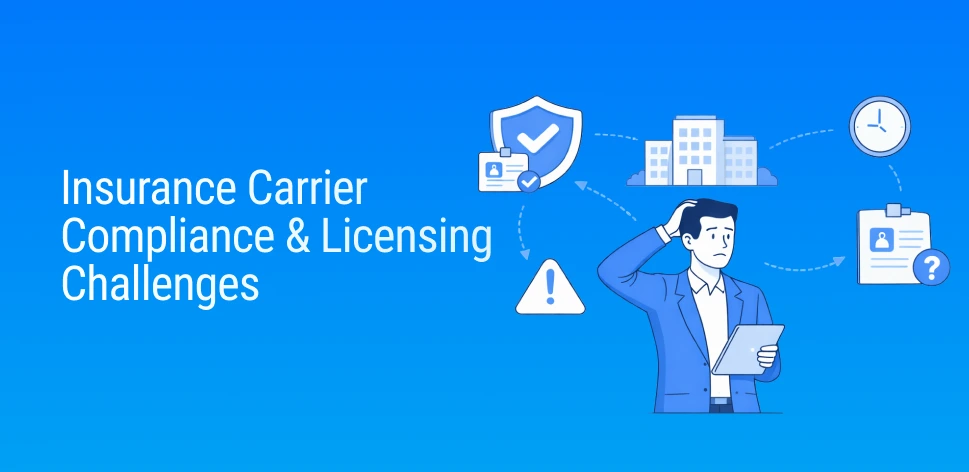
Some of the most common operational challenges carriers face include:
Managing multi-state producer licensing requirements
Tracking carrier appointments across jurisdictions
Monitoring regulatory changes from state insurance departments
Maintaining accurate licensing records for compliance audits
Managing license renewals and appointment expirations
Coordinating compliance data across underwriting, policy administration, and distribution teams
Modern insurance carriers automation and centralized workflows to support producer licensing, appointments, and overall management.
This guide examines the most significant insurance licensing challenges and compliance risks facing insurers today. It also explains how regulatory complexity affects insurance operations, producer management, and compliance oversight across carrier organizations.